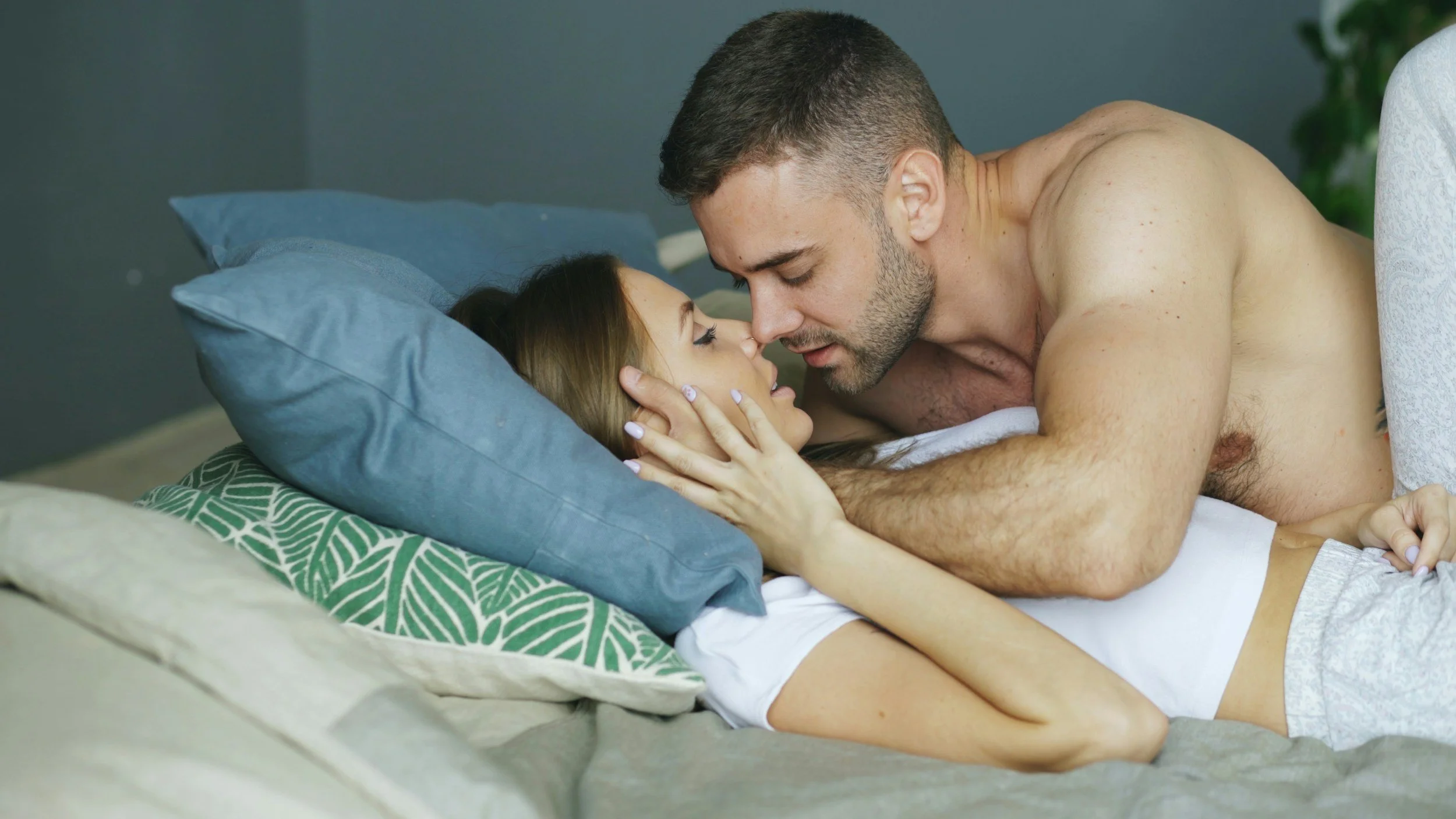
Thursday, March 5, 2026. This is for BetteSue Hamilton.
Sexsomnia is a sleep disorder in which people initiate sexual behavior while asleep and later have no memory of it.
There are certain things a man expects to be blamed for in a marriage.
Forgetting anniversaries.
Loading the dishwasher incorrectly.
Possibly the collapse of Western civilization, depending on the tone of the evening.
What one does not expect to be blamed for is romantic initiatives launched while one is entirely unconscious.
Yet there it was.
Confession is good for the soul, so here it is.
50 years ago, during my first marriage I was occasionally clocked—quite literally—for unconscious but unwelcome advances.
Not metaphorically clocked. Physically corrected. The sort of sharp elbow that arrives with the moral clarity of a church bell.
From my perspective, I had enjoyed a peaceful night’s sleep.
From my wife’s perspective, a man had attempted to initiate intimacy at an hour normally reserved for raccoons, burglars, and existential dread.
The conversation went something like this:
“I was asleep,” I would say.
“You were persistent,” she would reply.
And thus began my personal introduction to a curious neurological phenomenon known as sexsomnia.
It turns out the sleeping brain is capable of a surprising number of things.
Occasionally, however, it attempts courtship without supervision.
What Sexsomnia Is
Sexsomnia—often called sleep sex—is a form of parasomnia. Parasomnias are unusual behaviors that occur during sleep.
The category includes things like sleepwalking, night terrors, and sleep talking.
Sexsomnia belongs to this same neurological family.
Instead of wandering into the kitchen, the sleeping brain activates sexual behavior.
Episodes may include:
sexual vocalizations.
touching or fondling a partner.
masturbation.
attempts at intercourse.
The defining feature is that the individual is asleep and typically has no memory of the event the next day.
These behaviors usually occur during non-rapid eye movement sleep, particularly during the deepest stage known as slow-wave sleep.
Which raises the obvious question.
How can someone perform complex behavior while asleep?
The Strange Architecture of the Sleeping Brain
We tend to imagine the brain as a single command center.
It isn’t.
It is more like a federation of systems that normally cooperate but occasionally fall out of sync.
Sleep researchers describe sexsomnia using the concept of cortico-cortical dissociation.
Different regions of the brain can be in different states of consciousness at the same time.
Motor systems may activate.
But the supervisory systems responsible for judgment, inhibition, and social awareness remain offline.
The result is something both fascinating and unsettling.
The body can perform complex actions while the conscious mind is absent.
The brain presses play on a behavior.
The narrator has stepped out of the room.
Why Deep Sleep Creates the Problem
Most sexsomnia episodes occur during slow-wave sleep, the deepest stage of non-REM sleep.
This is when the body is conducting its nightly repair work.
Brain waves slow into delta rhythms.
Breathing stabilizes.
Blood pressure drops.
But slow-wave sleep has a vulnerability.
It is particularly sensitive to partial awakenings.
When something disrupts this stage, the brain may activate motor systems without fully restoring consciousness.
Common triggers include:
sleep deprivation.
alcohol.
emotional stress.
obstructive sleep apnea.
physical contact during sleep.
The brain briefly wakes.
But not completely.
The body moves.
Occasionally it moves with romantic ambition.
Five Things That Make Sexsomnia More Likely
Most people assume sexsomnia is random.
It usually isn’t.
Episodes tend to appear when sleep becomes unstable.
Researchers have identified several conditions that dramatically increase the odds.
Sleep deprivation.
Exhaustion deepens slow-wave sleep and increases the likelihood of partial awakenings.
Alcohol before bed.
Alcohol fragments sleep and disrupts normal sleep architecture.
Obstructive sleep apnea.
Repeated breathing interruptions create micro-awakenings that trigger parasomnias.
Stress and emotional overload.
Psychological stress destabilizes sleep cycles.
Physical contact during sleep.
Touch during deep sleep can trigger partial arousal in the brain.
The sleeping brain receives sensory input.
It misinterprets the signal.
And suddenly the situation becomes awkward.
The Sleeping Brain Has No Manners
Partners often report something peculiar about sexsomnia episodes.
The behavior is frequently more direct and less inhibited than the person’s normal waking sexuality.
This makes sense neurologically.
The brain’s internal editor—the system responsible for restraint—is asleep.
The sleeping brain does not negotiate.
It does not flirt.
It does not read the room.
It proceeds with the efficiency of a badly supervised intern.
Which creates a peculiar relational paradox heard in many therapy rooms.
One partner says:
“I was asleep.”
The other partner replies:
“Yes. But I was awake.”
Both statements are true.
The Relationship Impact
Sexsomnia creates one of the strangest emotional dynamics couples encounter.
The person experiencing the disorder may feel:
embarrassment.
confusion.
guilt.
disbelief.
Meanwhile the partner may feel:
startled.
annoyed.
uneasy.
occasionally amused.
The deeper tension is simple.
One partner insists the behavior was unconscious.
The other partner experienced it consciously.
This creates what might be called the sleep boundary problem in relationships—when behaviors emerging from unconscious states violate the boundaries couples rely on during waking life.
Navigating that tension requires empathy.
And sometimes a well-timed elbow.
The Autonomous Body Problem
Sexsomnia also exposes something slightly unsettling about human beings.
We like to believe every action we take originates in conscious choice.
But the brain does not always work that way.
Under certain conditions, complex behaviors can emerge from neurological systems operating without the participation of the conscious self.
I sometimes refer to this as the Autonomous Body Problem.
It describes situations where the body acts while the self is absent.
Sleepwalking is one example.
Night terrors are another.
Sexsomnia may be the most socially awkward version.
In each case the brain activates behavioral programs while the systems responsible for awareness remain offline.
The result is a person performing actions they never intended and may never remember.
Why Sexsomnia Makes Lawyers Nervous
Sexsomnia occasionally appears in criminal trials.
This makes lawyers extremely uncomfortable.
Most criminal law requires two elements:
the physical act.
the intent behind the act.
Sexsomnia complicates the second.
If someone truly was asleep, conscious intent may not exist.
But courts face an impossible problem.
Sleep studies can confirm a person has the disorder.
They cannot prove what happened during a particular night.
This uncertainty is why forensic specialists often describe sexsomnia as a nightmare for the legal system.
Treatment and Management
The good news is that sexsomnia is often manageable.
Treatment usually focuses on stabilizing sleep and removing triggers.
Common approaches include:
improving sleep hygiene.
treating obstructive sleep apnea.
reducing alcohol or sedative use.
stress reduction.
medications such as clonazepam.
Once sleep stability improves, many individuals experience dramatic reductions in episodes.
FAQ About Sexsomnia
What is sexsomnia?
Sexsomnia is a parasomnia in which a person engages in sexual behavior while asleep during non-REM sleep.
Is sexsomnia a real medical condition?
Yes. It is recognized in sleep medicine as a non-REM sleep-wake arousal disorder.
How common is sexsomnia?
Survey research suggests up to 10 percent of adults report experiencing sexual behavior during sleep at least once, though persistent cases are much rarer.
What triggers sexsomnia episodes?
Sleep deprivation, alcohol, stress, sleep apnea, and physical contact during sleep are common triggers.
Can sexsomnia be treated?
Yes. Treatment often focuses on improving sleep stability, addressing underlying sleep disorders, and sometimes medication.
Final Thoughts
Sexsomnia is strange, occasionally funny, sometimes unsettling, and deeply revealing about the sleeping brain.
It reminds us of something neuroscience keeps discovering again and again.
Human beings are not a single unified self.
The brain is a collection of systems that normally cooperate.
Usually.
Sometimes those systems fall out of sync.
When they do, the body may begin acting while the conscious self is still asleep. Behavior appears. Intent does not. Memory never arrives.
This is one of the quiet lessons of sleep science.
The brain is not a single narrator telling one continuous story. It is more like a committee. Most nights the committee works together beautifully.
Occasionally one department starts a project without informing the rest of the building.
Sexsomnia is one of the more socially awkward examples of that problem.
And if you ever find yourself accused of midnight diplomacy you genuinely do not remember initiating, there is a decent chance you are witnessing the strange architecture of the sleeping brain at work.
Still, if you share a bed with someone prone to such nocturnal enthusiasm, I can offer one small piece of clinical advice.
A firm elbow appears to be remarkably effective behavioral feedback.
Sleep medicine has not yet tested this in randomized trials.
But my former wife was extremely confident in the protocol.
And, in fairness, it worked.
Be Well, Stay Kind, and Godspeed.
REFERENCES:
Cankardas, S., & Schenck, C. H. (2020). Sleep sex (sexsomnia): An emerging parasomnia. International Journal of Sexual Health, 32(3), 254–265.
Guilleminault, C., Moscovitch, A., & Leger, D. (2002). Forensic sleep medicine: Sexsomnia. Psychosomatic Medicine, 64(5), 818–822.
Martynowicz, H., et al. (2018). Sleep bruxism as a trigger for sexsomnia episodes. Journal of Clinical Medicine, 7(11), 425.
Pyrgelis, E. S., et al. (2021). Forensic implications of sexsomnia. Sleep and Vigilance, 5, 31–39.
Rossi, J., et al. (2023). Video polysomnographic analysis of sexsomnia. Sleep.
Schenck, C. H., Arnulf, I., & Mahowald, M. W. (2007). Sleep and sexual behavior: Parasomnias and related disorders. Sleep, 30(6), 683–702.
Trajanovic, N. N., Mangan, M., & Shapiro, C. M. (2007). Sexsomnia: A survey of cases and characteristics. Social Psychiatry and Psychiatric Epidemiology, 42, 102–106.