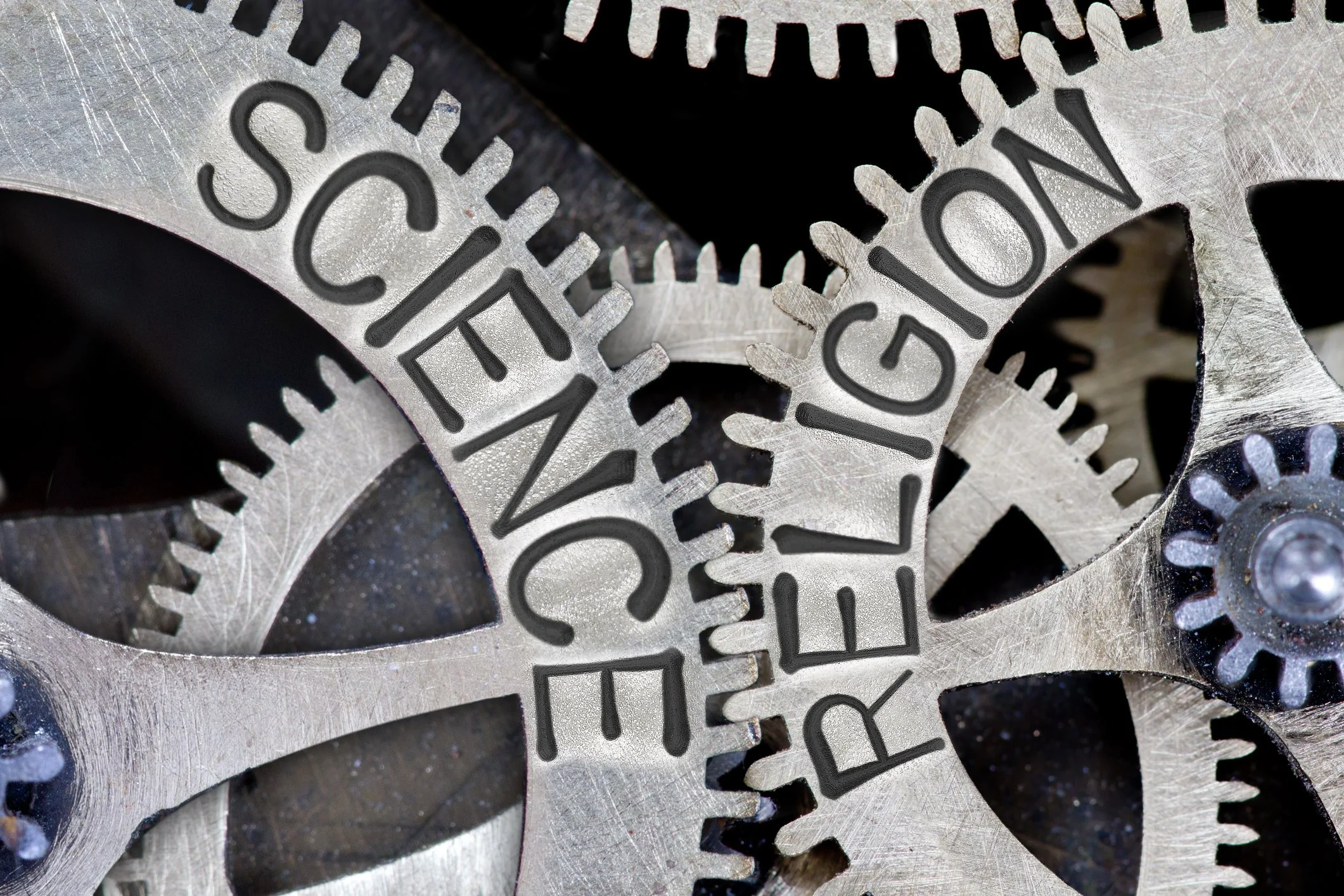
Saturday, March 14, 2026.
Most people like to imagine that their worldview emerged from careful reasoning.
They picture themselves as intellectual pioneers, arriving at their beliefs after examining evidence, weighing arguments, and deciding—on their own terms—what is true.
It is a flattering story.
It is also, according to modern psychological research, only partly accurate.
In my work with couples and families, I often see the same phenomenon: two intelligent life partners can interpret the exact same reality in completely different ways.
One partner trusts evidence, data, and scientific reasoning. The other leans toward faith, spiritual meaning, and divine purpose.
They assume the disagreement is philosophical.
In truth, it often began decades earlier—inside the homes they grew up in.
If this sounds familiar, welcome to the human experiment.
Many couples discover that their deepest disagreements about meaning, morality, and reality are rooted in childhood experiences neither partner consciously chose.
Before we explore why this happens, consider a small scene.
A child watches their parents every Sunday morning. Shoes polished. Keys in hand. The family leaves for church.
Later that week, those same parents volunteer at a charity event organized by the congregation.
Another child grows up in a different home.
Their parents bring them to science museums, answer questions about the stars, and treat curiosity like a small form of courage.
Neither child is given a lecture about philosophy.
But both are quietly learning how reality works.
The Study That Explains Why People Lean Toward Science or Religion
A study published in the journal Religion, Brain & Behavior examined why some adults rely primarily on science, while others rely more heavily on religion, when interpreting life events.
The researchers—Crystal L. Park, Adam B. David, Jeffrey D. Burke, and Lisa Annunziato of the University of Connecticut—surveyed 300 adults across the United States to examine how childhood experiences and personality traits shape adult worldviews.
Participants completed assessments measuring:
• childhood exposure to religion.
• childhood exposure to science learning.
• personality traits (Big Five).
• authoritarian attitudes.
• critical thinking ability.
• reliance on science or faith for understanding the world.
The researchers used the Science and Faith Mindsets Scale, which measures whether individuals trust scientific reasoning or divine guidance when confronting life's biggest questions.
Their findings reveal something both intuitive and profound.
Worldviews are not formed primarily through adult debate.
They are shaped through early lived experience.
Credibility-Enhancing Displays: Children Believe What Adults Do
One of the most important discoveries involved something psychologists call credibility-enhancing displays, often abbreviated as CREDs.
The idea is simple.
Children pay attention to costly actions, not just words.
If caregivers merely say religion is important but rarely practice it, children often do not internalize it deeply.
But when parents demonstrate their beliefs through action—attending services, volunteering, donating time and effort—children interpret those behaviors as evidence that the belief system is real.
The research found that adults who grew up observing strong credibility-enhancing religious behavior were significantly more likely to rely on religion later in life when interpreting events.
In other words:
Children believe what adults organize their lives around.
Not what adults say during dinner.
Science Works the Same Way
The same pattern appeared with science.
Adults who reported strong reliance on scientific reasoning were far more likely to have experienced childhood exposure to science learning, including:
• visits to museums.
• encouragement of curiosity.
• caregivers answering scientific questions.
• early engagement with how the natural world works.
These experiences predicted stronger reliance on science in adulthood.
Interestingly, encouraging scientific curiosity did not reduce religious belief.
Parents sometimes worry that exposure to science will undermine spiritual faith.
The research suggests otherwise.
Science education increased scientific reliance but did not eliminate religious frameworks.
Many people successfully integrate both systems.
Still, across the population there was a modest inverse relationship between the two approaches—most folks tend to lean slightly toward one primary meaning-making system.
Personality Traits Also Predict Worldviews
Childhood experience is not the entire story.
Personality traits also shape how people interpret reality.
The researchers examined the Big Five personality traits, which include:
• openness to experience.
• conscientiousness.
• extraversion.
• agreeableness.
• emotional stability.
Several interesting patterns emerged.
Openness to Experience Predicts Scientific Thinking
People high in openness—those who enjoy novelty, exploration, and intellectual curiosity—were more likely to rely on science as their primary explanatory framework.
This makes sense.
Scientific thinking requires a tolerance for uncertainty and revision.
Reality changes as evidence evolves.
For people high in openness, this is stimulating rather than threatening.
Authoritarian Personality Predicts Religious Reliance
Folks with stronger authoritarian tendencies—those who prefer clear hierarchies and obedience to authority—were more likely to rely on religion when interpreting life events.
Previous research has found similar relationships between authoritarianism and religious fundamentalism.
Structured belief systems can provide psychological stability and moral clarity.
For some people, this predictability is deeply reassuring.
Agreeableness Supports Both Science and Religion
One surprising result emerged with agreeableness, a personality trait associated with empathy and cooperation.
Agreeable souls were more likely to rely on both science and religion.
Researchers believe this may occur because agreeable people prefer shared frameworks for understanding reality.
Systems of belief—whether religious or scientific—help organize collective meaning.
For socially oriented souls, this sense of shared understanding can be appealing.
Introversion and Emotional Instability Also Predicted Science Reliance
Two unexpected findings emerged as well.
Participants with lower extraversion (more introverted personalities) tended to rely more on science.
Participants with lower emotional stability—those who experience more anxiety or negative emotions—also showed greater reliance on scientific reasoning.
The authors did not anticipate this result.
One possible explanation is that people experiencing more emotional turbulence may gravitate toward frameworks that promise predictability and explanation.
Scientific reasoning provides mechanisms and causal models.
For some folks, this explanatory structure can feel stabilizing.
Why Humans Need Systems of Meaning
Behind all of these findings lies a deeper psychological reality.
Human beings cannot tolerate a meaningless universe.
Psychologists call the process of interpreting life events sense-making.
When something major happens—loss, betrayal, illness, or unexpected joy—we immediately begin asking:
Why did this happen?
What does it mean?
Religion answers those questions through spiritual narratives, divine purpose, and moral meaning.
Science answers them through evidence, mechanisms, and causal relationships.
Both systems serve the same psychological function:
They help us feel that life is interpretable.
Without meaning frameworks, experience becomes chaotic.
And chaos is difficult to live with.
Limitations of the Study
The research provides important insights but also includes limitations.
First, the study relied on self-reported childhood memories, which can be imperfect.
Adult beliefs may shape how humans remember their upbringing.
Second, the study was cross-sectional, meaning it examined people at one point in time rather than tracking them across decades.
Because of this, the researchers cannot definitively prove that childhood experiences caused specific adult worldviews.
Future longitudinal research that follows children into adulthood would provide stronger causal evidence.
Finally, the study did not analyze specific religious traditions. Future work could examine whether different denominations produce different patterns of belief formation.
Why This Research Matters for Relationships
For couples, this research explains something many partners struggle to understand.
Two intelligent life partners can live in the same world and interpret it through entirely different meaning systems.
One partner may seek answers through evidence and rational analysis.
The other may turn toward faith, tradition, or spiritual interpretation.
Both approaches are attempts to solve the same problem:
How do we make sense of reality?
Understanding that these frameworks often originate in childhood can reduce unnecessary conflict.
Partners are not simply arguing about ideas.
They are defending deeply ingrained ways of interpreting life.
Frequently Asked Questions
Can someone believe in both science and religion?
Yes. Many folks integrate both systems. The study found a mild inverse relationship between reliance on science and religion, but the frameworks are not mutually exclusive.
Do religious parents prevent children from becoming scientific thinkers?
No. The research found that scientific curiosity increased when children were exposed to science learning opportunities, regardless of religious upbringing.
What is a credibility-enhancing display?
A credibility-enhancing display occurs when adults demonstrate beliefs through costly actions—such as volunteering, practicing rituals, or dedicating time to religious activities. These behaviors make beliefs more convincing to children.
Why do personality traits influence worldview?
Personality shapes how folks tolerate uncertainty, authority, and novelty. These traits naturally align with certain ways of interpreting reality.
Final Thoughts
Folks often assume worldviews are the result of intellectual debates held sometime during adulthood.
In reality, the foundations are usually laid much earlier.
Children observe what adults do.
They notice which beliefs guide decisions.
They watch where time, energy, and attention are invested.
And quietly, without realizing it, they begin constructing their own way of interpreting the universe.
For some, the world becomes a place best understood through evidence and experiment.
For others, meaning is discovered through faith and spiritual tradition.
Most of us carry some mixture of both.
Be Well, Stay Kind, and Godspeed.
REFERENCES:
Park, C. L., David, A. B., Burke, J. D., & Annunziato, L. (2023). Childhood experiences and personal traits as predictors of reliance on science and religion to make sense of the world: Results of a national U.S. study. Religion, Brain & Behavior.
McCauley, R. N., & Lawson, E. T. (2002). Bringing ritual to mind: Psychological foundations of cultural forms.Cambridge University Press.
Gervais, W. M., & Henrich, J. (2010). The Zeus problem: Why representational content biases cannot explain faith in gods. Journal of Cognition and Culture.