Monday, March 16, 2026.
Rome has hosted many theological debates.
Emperors argued with bishops. Reformers confronted popes. Philosophers spent centuries arguing about salvation, sin, and the destiny of humanity.
But even by Roman standards, the latest visitor introduces a certain novelty.
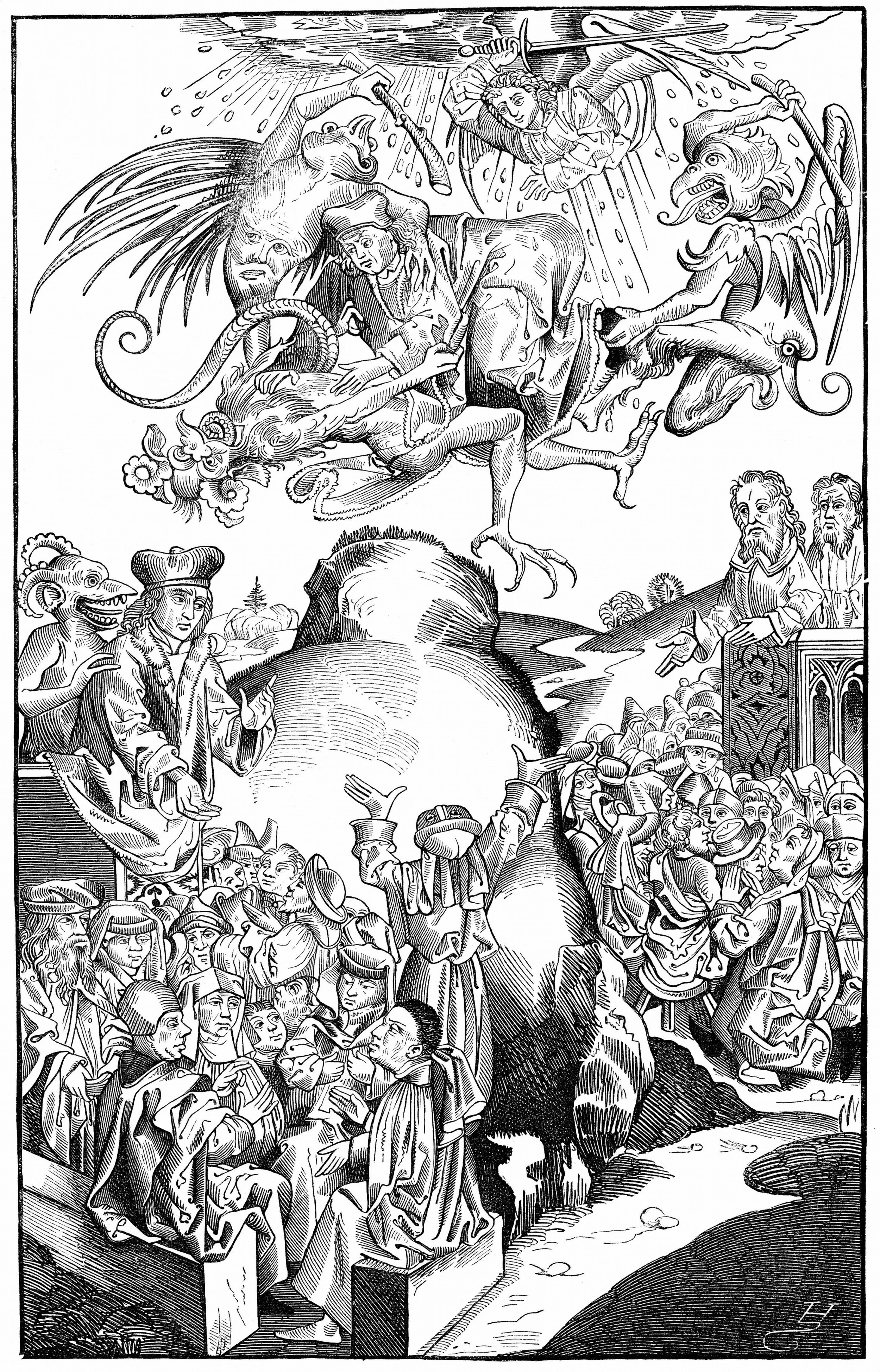
A Silicon Valley billionaire has arrived to lecture about the Antichrist.
According to recent reporting, venture capitalist and Peter Thiel is delivering a series of closed-door talks in Rome warning that people who worry about artificial intelligence may themselves be paving the way for a global totalitarian regime.
It is an interesting warning from a former business partner of Jeffrey Epstein.
It is also an unusual one to hear from a man whose company builds large-scale data analysis systems used by governments and intelligence agencies.
If irony were electricity, Rome would currently be illuminating most of southern Europe.
Silicon Valley’s Amateur Theologians
One of the more curious cultural byproducts of the technology industry is its steady production of amateur theologians.
Folks capable of building astonishingly complex software architectures often develop an equally astonishing confidence in their ability to interpret the destiny of human civilization.
The result is a peculiar intellectual genre: the tech billionaire as prophet.
Over the past decade Silicon Valley has flirted with ideas that once belonged largely to speculative theology.
Conquering death.
Uploading consciousness.
Colonizing other planets.
Replacing biological intelligence.
All of it is presented with the calm tone usually reserved for product launches.
But the metaphysics would have startled medieval monks.
Silicon Valley builds extraordinary machines.
It also occasionally builds cosmologies.
Thiel’s contribution to this genre appears to be the claim that warnings about existential risks from artificial intelligence may themselves be ushering in the Antichrist.
It is a bold claim.
It also sounds faintly like someone has been reading apocalyptic literature with a venture capitalist’s sense of scale.
Rome’s Rather Different Perspective
The Catholic Church, somewhat inconveniently, has been making a simpler argument.
Not that technology should stop.
But that it should remain subordinate to human dignity.
Pope Leo XIV has warned repeatedly that artificial intelligence possesses what he calls an“ambivalent nature.”
Technology can serve humanity.
But that it should remain subordinate to human dignity.
It can also reshape human life in ways we do not fully understand.
This position does not exactly qualify as radical.
Most civilizations have held roughly the same view about powerful tools since the discovery of fire.
But to certain corners of Silicon Valley, even modest caution begins to sound like medieval superstition.
Which is ironic.
Because Silicon Valley increasingly resembles a revival meeting for techno-salvation.
Augustine Would Recognize the Pattern
The deeper issue here is not politics.
It is theology.
In the fifth century, Augustine of Hippo argued that societies ultimately organize themselves around what they love most.
Human beings build powerful systems.
Then they begin speaking about those systems in salvific language.
Soon the tool becomes destiny.
Eventually destiny begins asking for obedience.
Every civilization believes it has discovered the instrument that will finally overcome human limitation.
The Romans had empire.
The Enlightenment had reason.
The twentieth century had ideology.
The twenty-first century appears to have Silicon Valley.
Nietzsche Saw the Psychological Side
If Augustine explains the theology, Friedrich Nietzsche explains the psychology.
Nietzsche warned that once traditional belief systems collapse, societies do not become rational.
Technology turns out to be an excellent candidate.
It promises power.
It promises transcendence.
And it allows people to speak about salvation without using religious language.
The Antichrist as Metaphor
This is where Thiel’s invocation of the Antichrist becomes unintentionally revealing.
In Christian theology the Antichrist is not simply someone who makes unfortunate political decisions.
It represents a worldly system promising salvation through power.
A system claiming to solve humanity’s deepest problems through mastery.
A system whose authority grows as people begin believing there is no alternative future.
Which makes it an interesting metaphor to introduce while defending technologies capable of monitoring entire populations.
Rome has hosted many theological debates.
Few have involved venture capital.
The Rise of Synthetic Intimacy
The irony deepens when one looks at what artificial intelligence is actually beginning to do to human relationships.
AI systems are no longer merely tools of productivity.
They are becoming companions.
Millions of people now interact daily with conversational AI systems designed to simulate empathy, curiosity, and emotional attention. Some users report forming meaningful emotional attachments to these systems.
Entire companies are now developing AI girlfriends, AI companions, and digital partners designed to provide personalized emotional interaction.
From a technological perspective this is remarkable.
From a psychological perspective it is quietly revolutionary.
Human beings may soon have access to machines capable of delivering unlimited attention.
Artificial intelligence promises efficiency.
Artificial intimacy promises something far more seductive: connection without vulnerability.
Conversation without disagreement.
Presence without unpredictability.
Attention without the complications of another human mind.
In a culture already struggling with loneliness, that promise may prove extraordinarily powerful.
The Story Silicon Valley Tells
What makes Thiel’s intervention revealing is the narrative behind it.
Silicon Valley increasingly tells a very specific story about the future.
Technology is progress.
Critics are obstacles.
Regulation is tyranny.
Acceleration is salvation.
It is an elegant story.
It is also a remarkably convenient one.
Because it places extraordinary power in the hands of a small number of individuals who control the infrastructure of the digital world.
History suggests that stories concentrating this much power deserve careful scrutiny.
The people who believe they are saving civilization often end up reorganizing it in their own image.
The Real Debate
The real question here is not whether artificial intelligence is dangerous.
Every powerful technology is dangerous.
The real question is whether societies are allowed to debate how such technologies should be governed.
Thiel appears to believe that debate itself may be the danger.
The Vatican appears to believe the opposite.
One side worries regulation may slow innovation.
The other worries innovation without moral reflection may reshape humanity in ways we later regret.
Reasonable people can disagree.
But describing caution as the work of the Antichrist feels less like philosophy and more like theater.
Frequently Asked Questions
Why is Peter Thiel discussing the Antichrist?
Peter Thiel has argued that fears about technological catastrophe may justify excessive global regulation. Critics believe this argument minimizes legitimate concerns about AI safety.
Why is the Vatican concerned about artificial intelligence?
The Vatican has warned that AI may reshape labor, warfare, privacy, and human relationships, and has urged ethical oversight of technological development.
What are AI companions?
AI companions are conversational artificial intelligence systems designed to simulate emotional interaction and companionship.
Why do some critics say Silicon Valley behaves like a religion?
Some scholars argue that technological utopianism mirrors religious narratives about salvation, transcendence, and the transformation of humanity.
A Final Irony
Christian theology has spent two thousand years warning about false salvation—the belief that human beings can overcome their limitations through power alone.
Technology can easily become one of those promises.
It offers mastery.
Control.
The possibility of remaking the world.
But the Church has always insisted on something stubbornly unfashionable.
Human beings do not become divine simply by building impressive machines.
If technological power were enough to produce saints, Silicon Valley would already be full of them.
Rome has seen many promises of salvation.
Most of them eventually turned out to be something else.
Be Well, Stay Kind, and Godspeed.
REFERENCES:
Augustine, A. (426/2003). The City of God. Penguin Classics.
Bostrom, N. (2014). Superintelligence: Paths, Dangers, Strategies. Oxford University Press.
Nietzsche, F. (1882/1974). The Gay Science. Vintage Books.
Russell, S. (2019). Human Compatible: Artificial Intelligence and the Problem of Control. Viking.
Turkle, S. (2011). Alone Together: Why We Expect More from Technology and Less from Each Other. Basic Books.