Monday, September 29, 2025. This is for Lisa.
Drive along the Mohawk Trail in the northern Berkshires and you’ll pass through Florida, Massachusetts — a town so small you might miss it.
Today it’s little more than a library, a scattering of houses, and a wind farm on the ridges.
But Florida once carried the weight of Boston’s ambition.
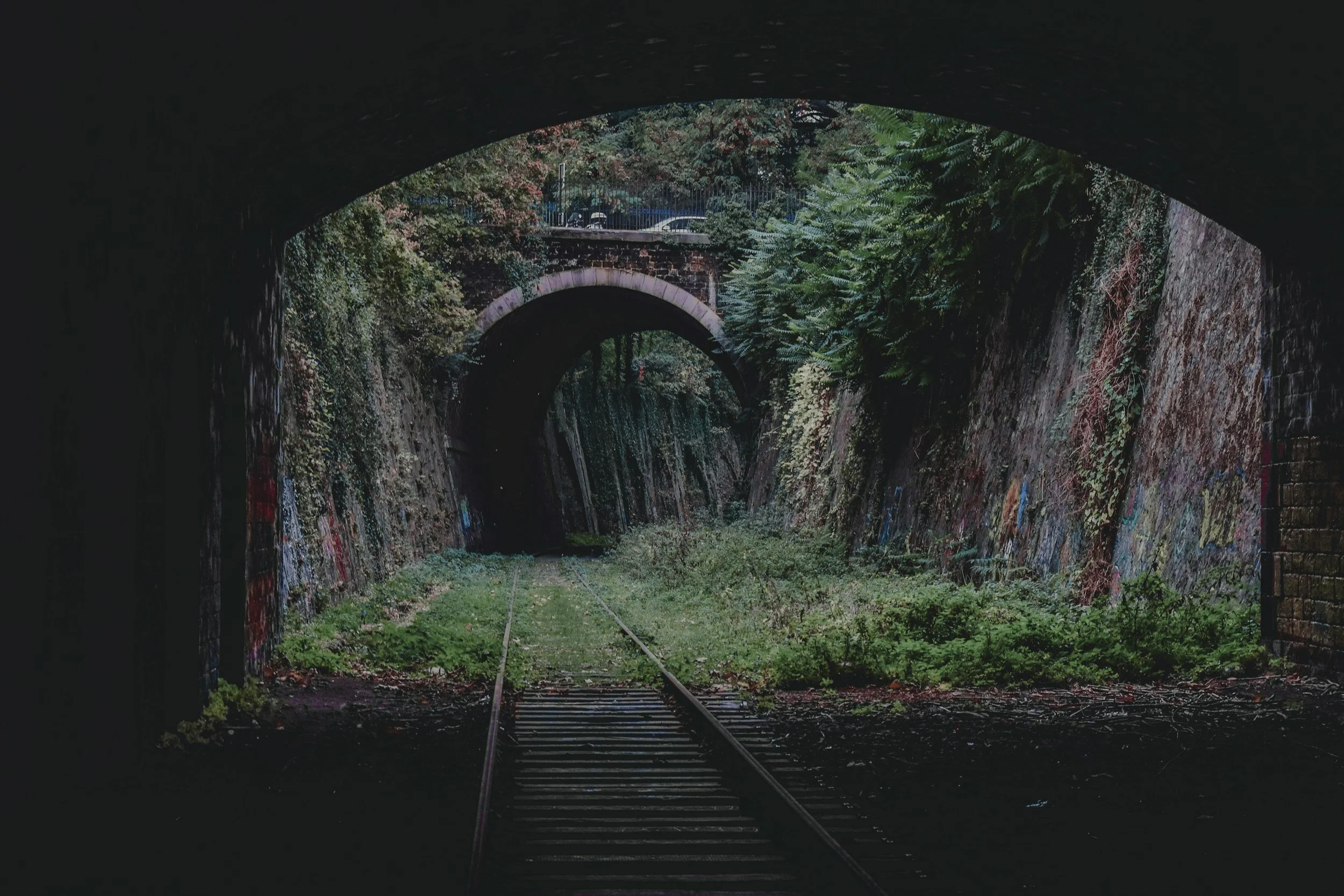
Beneath its hills lies the Hoosac Tunnel, a five-mile bore blasted through rock in the 19th century, known in its day as both The Great Bore and The Bloody Pit.
Florida raised the tunnel like a difficult child — fed it lives and money, endured its tantrums — and then watched Boston take the credit and move on.
The story still lingers in the hills, and it reads like a parable of marriage, children, and family.
Boston’s Grand Gesture
In the mid-1800s, Boston was desperate. New York City had the Erie Canal and the Hudson River, giving it a stranglehold on trade with the West. Boston feared being left behind, like a spouse losing ground in a long marriage.
The solution? A grand gesture.
Cut a tunnel through the Hoosac Range, linking Boston by rail to upstate New York and beyond. The east portal would be dug in Florida, Massachusetts — then a quiet farming village known for maple syrup, wool, and potatoes.
Overnight, the town was drawn into Boston’s commercial love affair with the West (Massachusetts Historical Society, 2011).
The Bloody Pit
Construction began in 1851 and dragged on for 24 years.
The Hoosac Tunnel soon earned its grim nickname: The Bloody Pit. More than 135 men — some estimates say nearly 200 — lost their lives to explosions, cave-ins, floods, and suffocation (Encyclopædia Britannica, n.d.; New England Historical Society, n.d.).
The most heart-breaking was the Central Shaft Disaster of 1867, when fire and flooding trapped 13 men.
For days, neighbors heard the pounding of picks deep below. Then silence.
When the shaft was drained a year later, their bodies were recovered. Evidence suggested they had survived for a time in an air pocket, carving desperately at the rock (New England Historical Society, n.d.). Widows were left with grief, children with unanswered questions.
The tunnel also became one of America’s first test sites for modern technology: compressed-air Burleigh drills, large-scale nitroglycerin blasting, and a vertical shaft more than 1,000 feet deep (Massachusetts Historical Society, 2011).
For Florida’s families, these “advances” just meant more heartbreaking funerals. Workers spoke of seeing ghosts in the smoke, and pale figures in the shafts. Families carried those stories home.
Boomtown and Silence
For a generation, Florida pulsed with noise and strangers. Engineers, Irish and Italian laborers, speculators — all crowded into the hills. Children learned to tell the difference between thunder and nitroglycerin. The town became a boomtown, but without the gold.
Then in 1875, the tunnel finally opened.
At 4.75 miles, it was the longest in North America and the second-longest in the world (Encyclopædia Britannica, n.d.; Wikipedia, 2025a).
Boston held parades. North Adams celebrated. Florida, though, returned to its chores. The workers left, the noise stopped, and the forest crept back over the scars.
Today the town has fewer than 700 residents. Freight trains still vanish into the mountain, but the glory is long gone (Wikipedia, 2025b). On the ridges, the Hoosac Wind Power Project now turns where nitroglycerin once shook the earth (Wikipedia, 2025b).
The Family Parable
The Hoosac Tunnel is a family story.
Couples therapists see this dynamic frequently. A marriage in crisis often bets on a grand project — a new house, a vacation, even a child — hoping the gesture will fix the cracks.
Families pour themselves into these undertakings, just as Boston poured itself into the tunnel. But the deeper truth is this: gestures fade, while the daily work of love remains.
Florida’s tunnel is a reminder of what families already know.
You can dig for decades, spend everything you have, and still be left with ghosts. You can pour yourself into children who grow up and belong to the world, not to you. You can sacrifice, and still feel, and be, utterly forgotten. Such is the human condition.
And yet — families persist. They shovel snow, pack lunches, argue over chores, and forgive each other in the morning. That is the real tunneling work.
Final thoughts
Florida, Massachusetts teaches a simple truth: families and marriages aren’t saved by parades or monuments. They are saved by persistence — by showing up, holding hands, cooking supper, and listening when it’s easier to turn away.
Sometimes love is a Great Bore. Sometimes it’s a Bloody Pit.
But if you keep digging side by side, you just might come out the other end with a passage wide enough for everyone to comfortably stumble through.
Be Well, Stay Kind, and Godspeed.
REFERENCES:
Encyclopædia Britannica. (n.d.). Hoosac Tunnel. In Britannica.com. Retrieved September 28, 2025, from https://www.britannica.com/topic/Hoosac-Tunnel
Massachusetts Historical Society. (2011, November 16). The Hoosac Tunnel completed. The Beehive Blog. Retrieved September 28, 2025, from https://www.masshist.org/beehiveblog/2011/11/the-hoosac-tunnel-completed/
New England Historical Society. (n.d.). The Hoosac Tunnel disaster of 1867. New England Historical Society. Retrieved September 28, 2025, from https://newenglandhistoricalsociety.com/hoosac-tunnel-disaster-1867/
Wikipedia. (2025a). Hoosac Tunnel. In Wikipedia. Retrieved September 28, 2025, from https://en.wikipedia.org/wiki/Hoosac_Tunnel
Wikipedia. (2025b). Florida, Massachusetts. In Wikipedia. Retrieved September 28, 2025, from https://en.wikipedia.org/wiki/Florida%2C_Massachusetts