Saturday, November 14, 2026.
What a dog photo can do for a family that stopped talking about politics, and then stopped talking altogether.
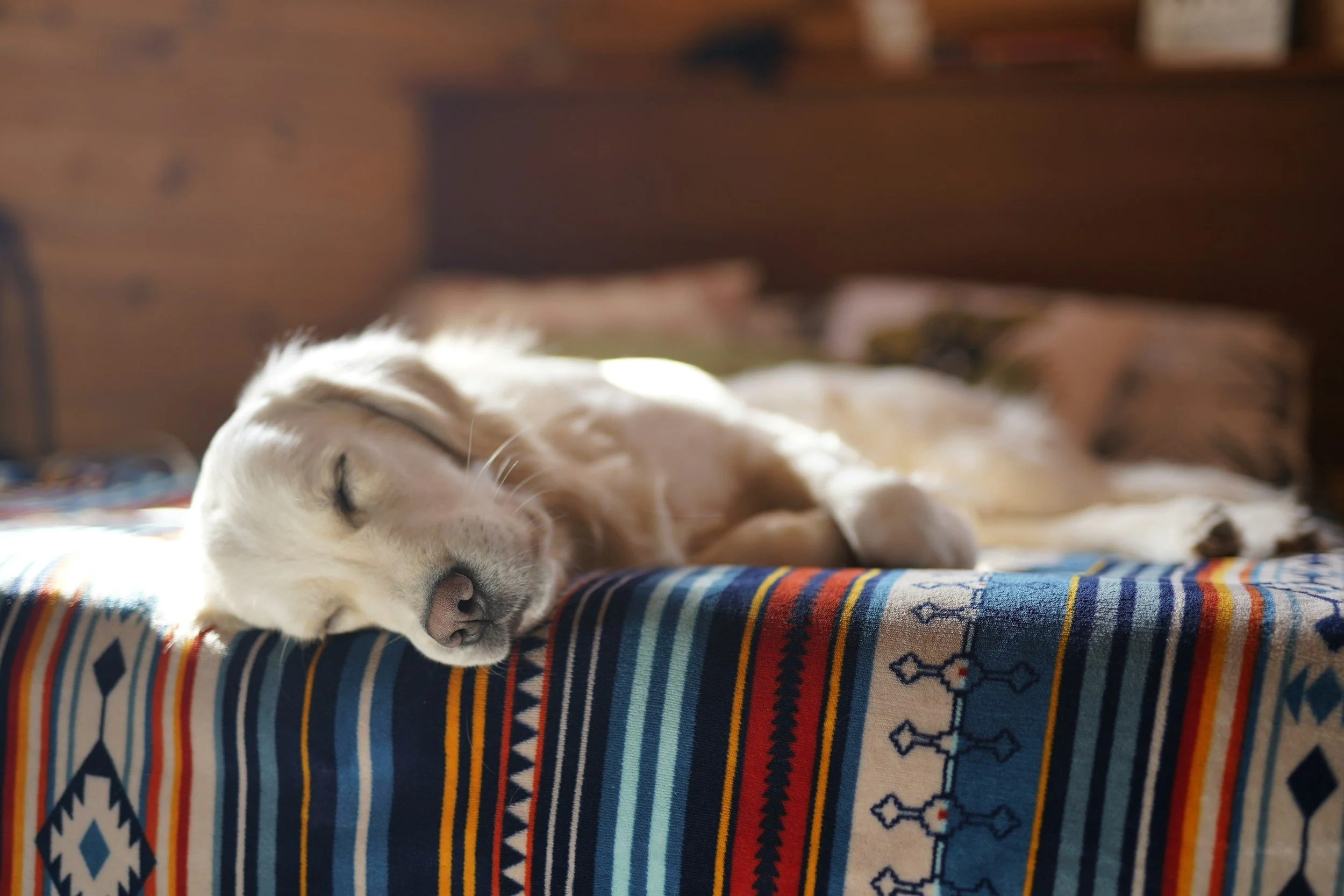
Your father sends a picture of the dog asleep with one ear inside out.
He’s been like this since lunch, he writes.
You enlarge the picture. There’s the old Indian blanket draped over the guest bed.
Your father used to take the blanket off when company came, a practice the dog understood to mean that company preferred the bed without its blanket.
You type Good boy and hit send.
It’s the first thing you’ve said to your father in four months.
Technically, you said it to the dog. A useful distinction, should anybody in the family ask.
The dog has no statement at this time
For years your father sent links. At first, you opened them.
Then you read the headlines in the preview.
Eventually you could tell from the hour of delivery what sort of link it was. Anything before six in the morning had been forwarded with a sense of civic duty.
You stopped answering after the cookout.
Your spouse had said something about her school, where she teaches, and your father asked her whether she was allowed to think for herself there.
Your brother laughed. You did too, a little, which is the part you remember in the car afterward, while your spouse looks out the window.
Later you tell your father you wish he’d call her.
He says he’d be happy to, if you can tell him exactly what she thinks he said.
You tell him exactly. He remembers the wording a little differently. By the end of the call you’re arguing about whether he said allowed.
The dog was at the cookout. He ate a paper plate. His account of the afternoon is likely to be the least contested.
What we called politics
In a 2025 survey, 37% of U.S. respondents said they’d lost a relationship over politics. Most of the losses were friendships (Güngör & Ditto, 2026).
Over the Trump years, we don't talk politics became a household rule in some families, like taking your shoes off at the door.
A surprisingly large number of things turned out to count as shoes. At the cookout, your spouse thought she’d been telling a story about work.
There are disagreements with your father you can live with.
You know this because you lived with them for years.
What you’re having a harder time living with is how quickly he reached for a laugh at your spouse’s expense, and how quickly you supplied one.
You had spent the drive home waiting for her to bring it up. She had spent it waiting for you.
What happens after “Good boy”
The next day your father sends a picture of the dog standing in the rain, facing the house, waiting for someone inside to improve the weather.
A week later he calls. He asks if your spouse is home.
You wait for him to tell you to put her on. Instead he asks whether she’d be willing to talk to him.
“I owe her an apology,” he says. “I was showing off for your brother.”
You’d spent four months thinking about what you would say if he ever said that. What comes out is “Okay.”
There’s a pause. You can hear the dog’s tags hitting the rim of his bowl.
“So we’re good now?” your father says.
You nearly say yes. You want him to call you again.
You’d like to ask whether he ever got the back steps fixed.
You’d like, for a minute, to be somebody whose father sends him pictures of the dog.
“I’m glad you called,” you say. “I’ll ask her if she wants to talk.”
He says, “Of course.” He sounds a little hurt. Then he asks you to ask her anyway.
You could tell her he’d like to apologize. You could also tell her that he feels terrible and it would mean a lot to him, which is how a life partner can get handed work before she’s even heard what the job is. After all, you get your father back. She gets invited to another cookout.
Related reading
Later that evening
You show your spouse the picture. She takes the phone and zooms in.
“His nails need cutting,” she says.
She always used to clip them. Your father would hold a spoonful of peanut butter while she did the front paws.
The back paws took two spoonfuls and a certain amount of lying about how close they were to being done.
For a moment, the two of you look at the dog. You can see why your father sent the picture.
Then, while you’re both still in the kitchen, you tell her why you laughed.
You say you wanted your brother to think you could take a joke. You say you knew she was the one being asked to take it.
She hands you back the phone.
“I know,” she says. “I was there.”
You stay in the kitchen.
Be Well, Stay Kind, and Godspeed.
If a family rupture has put strain on your relationship, you can explore my couples and family therapy services or get in touch to arrange a free introductory call.
REFERENCES:
Güngör, M., & Ditto, P. H. (2026). Political breakups: Interpersonal consequences of polarization. PNAS Nexus, 5(5), pgag067. https://doi.org/10.1093/pnasnexus/pgag067