Thursday, August 6, 2026.
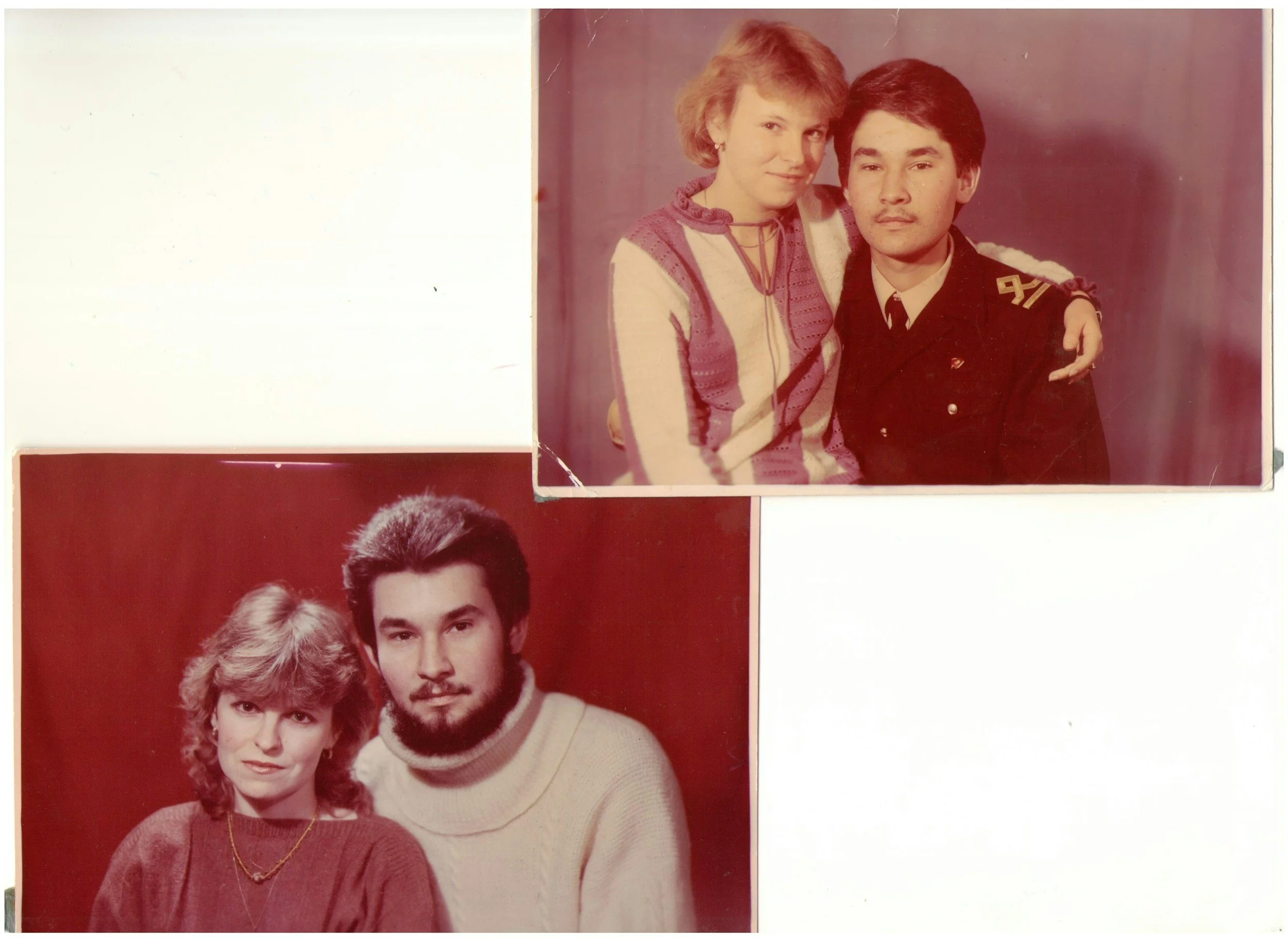
There was a time when a family photograph was permitted to be disappointing.
Someone blinked.
Someone else was chewing.
Mother looked tired because Mother was tired. Your uncle had placed his hand on the wrong woman’s waist. The toddler was attempting to leave the family altogether.
The photograph did not capture the family at its best.
It captured the family.
This was considered sufficient.
Years later, the picture might emerge from an envelope smelling faintly of dust and somebody’s basement. Everyone would gather around it and begin litigating the past.
“That was the Christmas your father lost his job.”
“No, it wasn’t.”
“Yes, it was. Look at him.”
“I think he was just drunk.”
The photograph could not settle the argument. Photographs have never been objective.
They omit everything beyond the frame, including the argument that occurred three minutes earlier and the woman in the kitchen quietly deciding she had married a fool.
Still, the picture possessed a certain authority.
The wallpaper had really been there.
The dress had really been yellow.
Mother had not smiled.
Now we can fix that.
With a few words typed into a phone, we can remove the ashtray, open the child’s eyes, replace the background, repair Mother’s expression, and animate her into turning toward us with a smile she may never have made.
We can even make the dead move.
At last, the family album has acquired an editorial department.
And it has notes.
The Past Is Now a Draft
We have spent several years worrying about what artificial intelligence might do to the future.
Will it take our jobs? Write our books? Choose our mates? Diagnose our illnesses? Compose an adequate apology after forgetting our anniversary?
These are reasonable questions.
But something quieter is already happening.
Artificial intelligence is changing our relationship with the past.
Google Photos now allows users to remove distractions, repair expressions, add elements, restore old photographs, expand scenes, and transform still images into short videos.
Apple Photos can remove unwanted people and objects and create “memory movies” by selecting images, arranging them into chapters, constructing a narrative arc, and adding music.
The language surrounding these features is relentlessly tender. We are invited to rediscover, enhance, restore, reimagine, and bring our memories to life.
Nobody says falsify.
That would spoil the mood.
But the boundary between preserving a memory and improving it is becoming difficult to see.
We are no longer merely storing photographs of our lives. We are authorizing software to decide which moments mattered, how they belong together, and what emotional story they should tell.
Your phone can now produce a film about your marriage.
It has selected the beach.
It has omitted the emergency room.
There is tasteful piano.
Apparently, you were very happy.
Can an Altered Photograph Change What We Remember?
Human memory has never been a reliable recording system.
We do not retrieve an untouched file each time we remember an experience. Memory is reconstructive.
Each recollection is assembled from fragments: sensory details, later information, family stories, current emotions, photographs, and whatever Aunt Helen has been insisting happened since 1986.
This makes memory remarkably useful and remarkably vulnerable.
In a preregistered study involving 200 participants, researchers examined whether AI-altered images and videos could influence recollection. Participants first viewed original photographs.
Later, depending on their assigned condition, they encountered unedited images, AI-edited images, AI-generated videos, or AI-generated videos created from edited images.
Exposure to altered material increased false recollections. The strongest effects appeared when participants saw AI-generated videos made from AI-edited photographs.
More troubling, participants did not merely remember inaccurate details.
They became more confident that those details were true.
That confidence is the blade inside the velvet box.
A synthetic image does not need to persuade us that an entirely fictional event occurred. It may only need to alter one emotionally significant detail.
Mother smiled.
Father stood closer.
The room was brighter.
The absent person was present.
The unwanted person was gone.
Once seen, the improved version becomes part of the material from which memory is reconstructed.
Eventually, we may remember the animation instead of the photograph, the photograph instead of the event, and the event as something far more coherent than life generally permits.
The technology does not need to erase the past.
It can simply provide a more attractive competitor.
The Family Album Was Never Innocent
Families were revising history long before anyone installed an app.
Every family has an unofficial archivist. This is usually the person with the albums, the recipes, the baptismal certificates, and extremely firm opinions about what everyone’s childhood was like.
She does not consider herself powerful.
She is merely the only person with the documentation.
Families also edit through repetition. A story is told so often that it hardens into fact.
Your brother was “the difficult one.”
Your mother “held everyone together.”
Your father “did the best he could.”
Your parents “never argued.”
You were “always independent.”
These descriptions may contain truth. They may also conceal entire continents of experience.
The family story becomes a form of emotional zoning. Certain memories receive permits. Others are declared unsuitable for development.
What changes with AI is the persuasive force of the revision.
The old family storyteller had to rely on charm, seniority, repetition, or shouting.
The new storyteller can produce visual evidence.
Families will not merely disagree about what happened. They may possess competing versions of the photograph.
The Embrace That Never Happened
There is a generous argument for altering family images.
Perhaps the original photograph failed to capture the emotional truth of the occasion. The child looked away at precisely the wrong moment. The grandmother’s face was obscured. The only photograph of an important reunion was badly exposed.
AI may help people restore damaged images, visualize family history, or create something meaningful from fragments that would otherwise be lost.
Someone may animate a photograph of a deceased parent and feel, for a few seconds, the physical memory of being loved.
It would be cruel to dismiss that experience merely because software helped produce it.
Emerging research suggests that folks sometimes knowingly prefer an altered image because it expresses what the relationship felt like. They understand that the picture is synthetic while experiencing it as emotionally authentic.
The embrace never occurred.
The love did.
That distinction deserves respect.
But emotional truth is powerful precisely because it can overrule inconvenient facts.
A parent may believe that an improved photograph captures the warmth of the family. An adult child may see another attempt to erase how frightened everyone actually was.
One sibling may experience an animated image of their dead mother as a gift. Another may experience it as a trespass.
One spouse may remove a former partner from an old photograph as an act of closure. The children produced by that earlier relationship may experience the edit as a small act of historical violence.
The question is no longer whether synthetic memories are real or fake.
The harder question is this:
Who gets to decide what the shared past should look like?
The New Marital Argument
Couples already have a memory problem.
Two life partners can attend the same dinner, sleep in the same room, raise the same children, and emerge with accounts of the marriage that appear to have been written on separate planets.
“You were furious that night.”
“I was tired.”
“You barely spoke to me.”
“We had a wonderful evening.”
“You humiliated me in front of everyone.”
“I was joking.”
The conventional assumption is that one partner must be mistaken.
Sometimes one is. Sometimes one is lying. But often the disagreement exists because each person encoded a different emotional experience.
One remembers what was said.
The other remembers what became impossible to say.
One remembers the vacation itinerary.
The other remembers carrying the children, the bags, the sunscreen, and everybody’s mood.
One remembers the anniversary dinner.
The other remembers arranging it.
Photographs are routinely recruited as evidence in these disputes.
“Look at us. We were happy.”
But a smiling photograph does not prove happiness. It proves that two people smiled during the fraction of a second when the shutter opened.
Now even that modest claim may be unavailable.
Was the smile original?
Was someone removed?
Was the distance between two bodies adjusted?
Did the software choose this photograph because it fit the story it had already decided to tell?
The marital archive is becoming editable at precisely the moment couples are increasingly outsourcing their memories to it.
We no longer remember the vacation.
We remember the pictures of the vacation.
Soon, we may remember the improved pictures.
The Keeper of the Archive
The partner who controls the archive holds an unusual form of intimate power.
This has always been apparent after separation and divorce. One spouse keeps the albums. One controls the shared cloud account. One decides which photographs remain visible to the children.
AI expands that power. The keeper of the archive can now alter not only access to the past but its appearance.
Imagine a divorced parent quietly removing the former spouse from years of family photographs.
Imagine a new partner inserted into an old vacation scene.
Imagine a deceased family member made to speak words they never said.
Imagine a parent producing cheerful animations from a childhood an adult child remembers as terrifying.
None of this requires malicious intent.
That is what makes it dangerous.
People rarely describe themselves as rewriting history. They are cleaning things up. Making the picture nicer. Helping the children. Preserving the good times. Removing negativity.
Families have committed a remarkable amount of emotional vandalism under the banner of keeping things pleasant.
AI simply supplies better equipment.
Was My Life Real Enough?
Beneath the fear of falsification lies a quieter anxiety.
What if ordinary life no longer feels acceptable unless it has been corrected?
The child was looking away.
The kitchen was cluttered.
Mother looked old.
Father was not there.
The marriage later ended.
The dead person never met the baby.
AI offers to repair these disappointments retroactively. It can create the portrait we forgot to take, the reunion that never occurred, the embrace history withheld.
This is technologically astonishing and emotionally irresistible.
It also reveals how little tolerance we have developed for the unfinished nature of human life.
Real families are poorly lit.
People enter the frame at the wrong time. They make unfortunate faces. They love one another inadequately. They die before the photograph we meant to take.
Some losses cannot be made beautiful without being made less true.
A culture that cannot tolerate an awkward photograph may eventually lose its tolerance for an awkward past.
The Bigger Story
A healthy family does not require a single, flawless account of its history.
It requires enough emotional safety for different accounts to coexist.
Your childhood may not have felt like your brother’s childhood.
Your spouse may remember the early marriage more warmly than you do.
Your mother may have both loved you and failed you.
Your father may have been charming in photographs and terrifying after dinner.
These truths do not cancel one another merely because they are difficult to arrange into a pleasing slideshow.
The goal of family healing is not to establish one authorized version of the past. It is to become more capable of hearing what the same past was like for someone else.
That requires curiosity.
It also requires restraint.
Before altering a shared photograph, families may need to ask questions that would have sounded preposterous five years ago:
Does everyone represented in this image consent to the alteration?
Will the original be preserved?
Is this an artistic creation or a historical record?
Could the edit change how a child understands the family?
Are we restoring a damaged detail—or removing an inconvenient truth?
Who might experience this image as comforting?
Who might experience it as erasure?
We may need a new category for these artifacts.
Not fake.
Not documentary.
Perhaps imagined family memory: an emotionally meaningful construction that is clearly identified and never permitted to replace the original.
The label matters because tenderness should not require deception.
Let Mother Keep Her Face
There is something honorable about the unimproved photograph.
The light is bad.
The composition is worse.
Everyone is wearing fabrics later investigated by Congress.
But the picture carries the texture of an uncorrected life.
Mother looks tired because caring for everyone was exhausting.
Your brother is glaring because the family was not always easy for him.
Your father is missing because he was often missing.
The ashtray remains on the table because the past does not exist to flatter us.
We do not honor our families by converting them into propaganda.
We honor them by becoming strong enough to remember them whole: the affection and the injury, the beauty and the wallpaper, the people who stayed, and the ones who had already begun to leave.
Perhaps Mother should be allowed to keep the face she made.
Perhaps the photograph does not need to reassure us.
Perhaps the most loving thing we can do with the past is stop asking it to smile.
Frequently Asked Questions
Can AI-edited photographs really change memory?
Early research suggests that they can. Exposure to AI-altered photographs and videos has been associated with more false recollections and greater confidence in those inaccuracies. This does not mean every edited image implants a memory. It means visually persuasive alterations can become part of the material from which later memories are reconstructed.
Aren’t family photographs already selective?
Yes. Every photograph excludes what happened before, after, and outside the frame. AI creates a new problem because details within the frame can be convincingly added, removed, repaired, or animated without the alteration being obvious.
Is it wrong to animate a photograph of someone who has died?
Not necessarily. Some people find these animations deeply comforting; others find them invasive or disturbing. The important issues are transparency, emotional readiness, respect for other family members, and whether the synthetic image supplements real memories or begins to replace them.
Should parents show AI-generated family images to children?
Carefully. Younger children may not understand the difference between a historical photograph and an imagined representation. Adults should explain clearly that the image was created, preserve the original, and avoid presenting an event that never occurred as family history.
Is removing an ex-partner from a photograph unhealthy?
Context matters. Editing a private copy may offer a feeling of closure. Altering the family archive is more consequential, especially when children are involved. A relationship may end without making that person’s historical place in the child’s life disappear.
Why do partners remember the same event differently?
People notice and encode different aspects of an experience. Emotion, attachment history, stress, attention, neurodiversity, expectations, and later events all shape recollection. Different memories do not automatically mean that one partner is dishonest.
What should couples do when they disagree about the past?
Shift the opening question from “Which of us is correct?” to “What was this experience like for each of us?” Facts remain essential where accountability, abuse, or betrayal is involved. But many repetitive arguments soften only after both partners understand the emotional meaning beneath the disputed details.
Should altered family photographs be labeled?
Yes. Preserve the original and clearly identify the altered version with language such as “AI-edited,” “restored with generated details,” or “imagined family image.” Future viewers should be able to distinguish documentation from creative reconstruction.
Can synthetic memories be therapeutically useful?
Possibly, when used carefully. An imagined image might help someone express grief, longing, or an unmet attachment need. It should not be presented as evidence that an event occurred, nor should it replace the work of grieving and accepting what could not happen.
When should couples seek help over conflicting memories?
Consider couples therapy when disagreements about the past become repetitive, contemptuous, connected to trauma or betrayal, or used to invalidate one partner’s basic reality. The therapeutic task is not merely to deliver a verdict. It is to understand why the disagreement remains emotionally alive.
Why Work with Daniel?
Couples rarely fight only about what happened.
They fight about whose version of what happened will be recognized as real.
Daniel Dashnaw brings decades of experience to couples caught in competing histories—particularly relationships shaped by betrayal, attachment injuries, neurodiverse misunderstandings, entrenched conflict, and radically different accounts of the marriage.
The work does not appoint one partner the official historian while treating the other as an unreliable witness. It helps both people understand what their memories mean, what injuries remain emotionally alive, and why being contradicted now feels so threatening.
Because intimacy does not require identical memories.
It requires enough emotional safety to remain curious when the person you love remembers differently.
The Past Is Not Going to Settle This for You
Some couples spend years trying to establish the definitive version of the marriage.
Who withdrew first. Who stopped listening. Who ruined the vacation. Who was lonely longer. Who remembers correctly.
But intimacy rarely returns because one partner finally wins the historical argument. It returns when both people can understand what the past still means—and why it remains so emotionally alive in the present.
Daniel Dashnaw helps couples move beyond the exhausting courtroom of competing memories. The work is direct, compassionate, and grounded in the understanding that two people can share a life without experiencing it in the same way.
You do not have to agree about every photograph to decide what happens next.
Schedule a free introductory consultation with marriage and family therapist Daniel Dashnaw and begin building a future that does not require either of you to erase the past.
Be Well, Stay Kind, and Godspeed.
REFERENCES:
Apple. (2024, October 28). Apple Intelligence is available today on iPhone, iPad, and Mac. https://www.apple.com/newsroom/2024/10/apple-intelligence-is-available-today-on-iphone-ipad-and-mac/
Apple. (n.d.). Use Apple Intelligence in Photos on Mac. Apple Support. https://support.apple.com/guide/mac-help/use-apple-intelligence-in-photos-mchl35c53342/mac
Google. (2025, July 23). Transform your photos into videos and remix your pics in Google Photos. https://blog.google/products-and-platforms/products/photos/photo-to-video-remix-create-tab/
Google. (2025, August 20). Edit images in Google Photos by simply asking. https://blog.google/products-and-platforms/products/photos/ai-photo-editing-google-photos/
Hoskins, A. (2024). AI and memory. Memory, Mind & Media, 3, e17.
Pataranutaporn, P., Danry, V., Leong, J., Punpongsanon, P., Novy, D., Maes, P., & Sra, M. (2025). Synthetic human memories: AI-edited images and videos can implant false memories and distort recollection. In Proceedings of the 2025 CHI Conference on Human Factors in Computing Systems. Association for Computing Machinery. https://doi.org/10.1145/3706598.3713697
Wu, Y., Li, B., Ding, X., & Wang, H. (2026). “I’m happy even though it’s not real”: GenAI photo editing as a remembering experience. In Proceedings of the 2026 CHI Conference on Human Factors in Computing Systems (pp. 1–18). Association for Computing Machinery. https://doi.org/10.1145/3772318.3790927