Marriage as Sacred Practice: What Relational Spirituality Reveals About Lasting Love
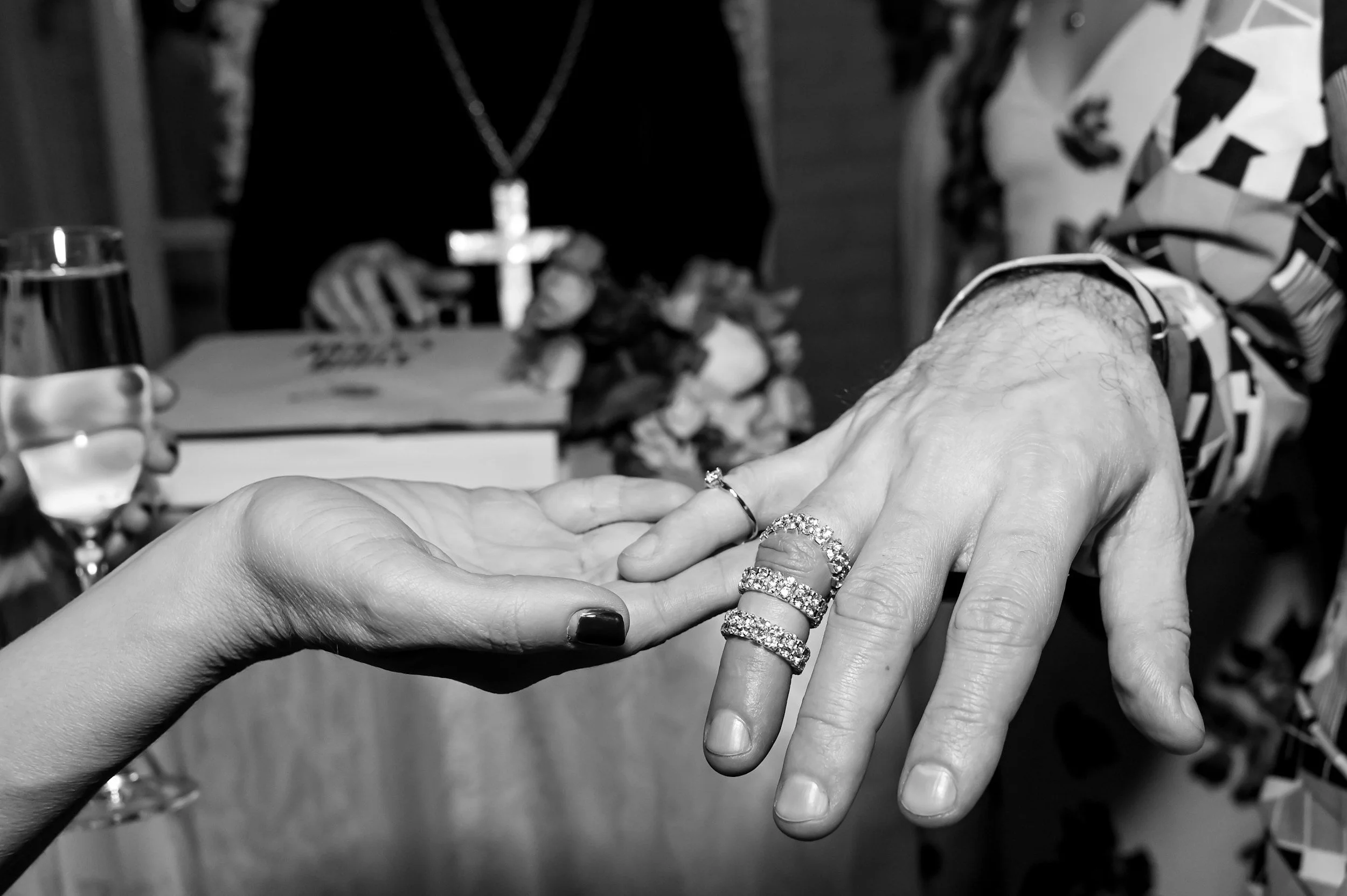
Friday, April 24, 2026. This is also for Marly and Ben
When Marriage Takes On Sacred Meaning
Modern marriage has become remarkably skilled at talking about technique.
Communication skills. Conflict repair. Attachment needs. Boundaries.
All useful.
And yet many couples do not suffer from a lack of technique.
They suffer from a thinning of meaning.
That may be one reason the psychology of spirituality has something unexpectedly practical to say about intimate life.
Psychologist Annette Mahoney has spent years studying what she calls a relational spirituality framework—a way of understanding how couples sometimes experience their bond not merely as emotional arrangement, but as carrying moral, existential, even sacred significance.
That perception, she argues, can shape commitment, sacrifice, forgiveness, and also the particular pain of betrayal.
That is worth taking seriously.
If you are reading this out of curiosity, stay with me.
If you are reading because something in your relationship feels harder to name than conflict alone, some of what follows may offer language.
Psychology Was Slow to Notice This
Modern psychology has often been far more comfortable studying regulation than reverence.
Who pursues. Who withdraws. Who repairs.
Important questions.
But perhaps not the only ones.
Because couples often do something psychologically unusual.
They endow ordinary things with extraordinary significance.
Wedding rituals. Private symbols. Shared vows. The table where losses were survived. The phrase only two people understand.
Mahoney uses the language of sanctification to describe when people perceive family bonds as possessing sacred character.
In some studies, this has been associated with stronger commitment and sacrifice, though not in simplistic or universal ways.
Associated. Not guaranteed.
That distinction matters.
Discovery: Meaning at the Beginning
Life partners often describe falling in love in language that exceeds preference.
We were meant to meet. Something brought us together. It felt given.
Even secular people reach for language with theological overtones.
Mahoney does not ask us to treat these claims literally.
Only to notice they matter psychologically.
The stories couples tell about why they are together often help organize how they suffer, endure, and repair.
Some stories support resilience.
Others trap people inside a suffering that they idealize.
Both possibilities matter.
Maintenance: Sacred Meaning in Ordinary Life
Most marriages do not collapse dramatically.
They wear down.
Attention narrows. Admiration fades. Obligations harden. Resentments deposit sediment on the soul.
Here sacred meaning may function less as sentiment than discipline.
If a relationship carries moral significance, forgiveness may be approached differently. Repair may be pursued differently. Caregiving may be experienced differently.
Not because couples feel transcendent.
Because they may feel accountable to something larger than immediate mood.
That is psychologically interesting.
And clinically consequential.
Spiritual Intimacy
One of the richer aspects of this work concerns spiritual intimacy.
Can partners disclose not only emotion, but ultimate concerns?
Questions of meaning. Doubt. Mortality. Faith. Purpose.
Many couples share logistics, conflict, and affection for years while never touching this layer.
Others build profound closeness partly through it.
That deserves more attention than it usually receives.
When Sacred Meanings Become Burdens
One reason I trust Mahoney’s framework is that it resists sentimentality.
Sacred meanings can deepen devotion.
They can also intensify rigidity. Shame. Moral superiority. Or the endurance of what should not be endured.
Her discussion of spiritual one-upmanship remains especially important.
Sometimes spiritual language becomes a vehicle for power.
And sometimes leaving, not staying, is the more ethical act.
That belongs in a mature psychology of marriage.
A Possible Extension: Reverent Attention
Reading Mahoney, I found myself wondering whether some part of what sustains long relationships may involve not only shared sacred meanings, but also a certain quality of attention.
Not idealization.
Something more like sustained regard.
I offer that cautiously, because it reaches beyond her formal model.
Still, clinicians often observe moments that seem difficult to describe otherwise:
A husband quietly helping his wife with a tremor she is ashamed of.
A wife listening to the same old story from a grieving spouse as though hearing it for the first time.
An exhausted couple making tea for one another at midnight after sitting beside a sick child.
These are small things.
Yet they sometimes seem to carry disproportionate moral beauty.
Perhaps some forms of admiration live there.
I do not make too much of that.
But I suspect it matters.
Attachment, Meaning, and Indifference
Attachment theory asks:
Are you available to me?
Relational spirituality adds another question:
What meaning does this bond participate in?
Most couples, I find, need both.
And this may help illuminate something often underdescribed: indifference.
Not conflict. Not betrayal. A simple erosion of curiosity.
Partners becoming the background.
Within a framework of sacred meaning, one might ask whether chronic indifference can feel more injurious than standard communication models suggest.
I think many couples would say yes.
Not because indifference is metaphysically dramatic.
Because being no longer carefully regarded wounds people.
Quietly, and profoundly.
Awe in Ordinary Marriage
There is interesting overlap here with research on awe and self-transcendent emotion.
Experiences of awe may reduce self-focus and increase prosocial orientation.
If so, one wonders whether enduring marriages sometimes contain small recurring forms of reverence.
Watching a partner care for an aging parent. Seeing steadiness under strain. Noticing, years later, qualities one had forgotten to notice.
Not grand revelations.
Ordinary astonishments.
That may be closer to reverence than many people realize.
Contract and Covenant
An older distinction still seems useful.
Contract asks what is owed.
Covenant asks what is entrusted.
Perhaps that overstates the difference.
Still, consider two marriages.
In one, every contribution becomes ledger. Who did more. Who owes whom.
In another, obligations exist too, but are nested inside stewardship.
The question is less What am I owed? than How do we care for what has been placed between us?
That difference can shape a marriage.
What This Offers Therapists
For clinicians, this framework opens neglected questions.
Is a couple struggling primarily with attachment injury?
Or with injuries experienced as violations of shared sacred meaning?
Those may overlap.
But they may not be identical.
And treatment may differ accordingly.
That seems important.
Does Spirituality Help Marriage?
Sometimes.
Under certain conditions.
Shared spiritual meaning can support humility, resilience, and repair.
It can also reinforce hierarchy, shame, or coercion.
The context matters.
Always the context.
That is part of what makes this work so valuable.
It resists romantic generalizations.
Final Thoughts
I do not take relational spirituality to mean marriages need explicit religion in order to deepen.
Many secular couples embody reverence.
Many religious couples do not.
The deeper question may be whether life partners experience their bond as carrying significance beyond convenience.
And whether they live accordingly.
That may show itself less in dramatic gestures than in ordinary forms of carefulness.
The way someone listens. The way they repair. The way they continue, after familiarity should have made wonder harder.
Perhaps reverence in marriage often looks almost ordinary.
Which may be why it is so easy to miss.
And why it so profoundly matters.
Frequently Asked Questions
What is relational spirituality?
A framework describing how spiritual beliefs, meanings, and practices shape family relationships during formation, maintenance, and transformation.
What is sanctification in marriage?
Perceiving marriage or family life as possessing sacred significance, which may influence commitment, sacrifice, and responses to injury.
Can spirituality harm relationships?
Yes. It can deepen coercion, shame, or moral superiority as easily as it can deepen compassion.
Is this different from attachment theory?
Yes. Attachment focuses on emotional security. Relational spirituality focuses more on meaning, transcendence, and sacred interpretations of bonds.
Can nonreligious couples have a sacred marriage?
Certainly. Sacredness may arise through reverence, shared moral purpose, ritual, and devotion without explicit religious belief.
When Reading About Relationships Isn’t Enough
Sometimes what begins as intellectual interest is really private pain looking for language.
If your relationship feels caught in patterns that ordinary advice has not shifted, focused help may be worth considering.
Some couples benefit from concentrated, science-based intensives that create movement far more quickly than weekly work alone.
Do you deserve a conversation about this?
Be Well, Stay Kind, and Godspeed.
REFERENCES:
Mahoney, A. (2013). The spirituality of us: Relational spirituality in the context of family relationships. In K. I. Pargament, J. J. Exline, & J. W. Jones (Eds.), APA handbook of psychology, religion, and spirituality.
Mahoney, A. (2010). Religion in families, 1999–2009: A relational spirituality framework. Journal of Marriage and Family, 72(4), 805–827.
Mahoney, A., Pargament, K. I., Murray-Swank, A., & Murray-Swank, N. (1999). Religion and sanctification of family relationships. Review of Religious Research, 40(3), 220–236.
Pargament, K. I. (1997). Psychology of Religion and Coping.
Fincham, F. D., Ajayi, C., & Beach, S. R. H. (2011). Spirituality and marital quality. Journal of Family Psychology, 25(5), 684–692.