Saturday, December 27, 2025.
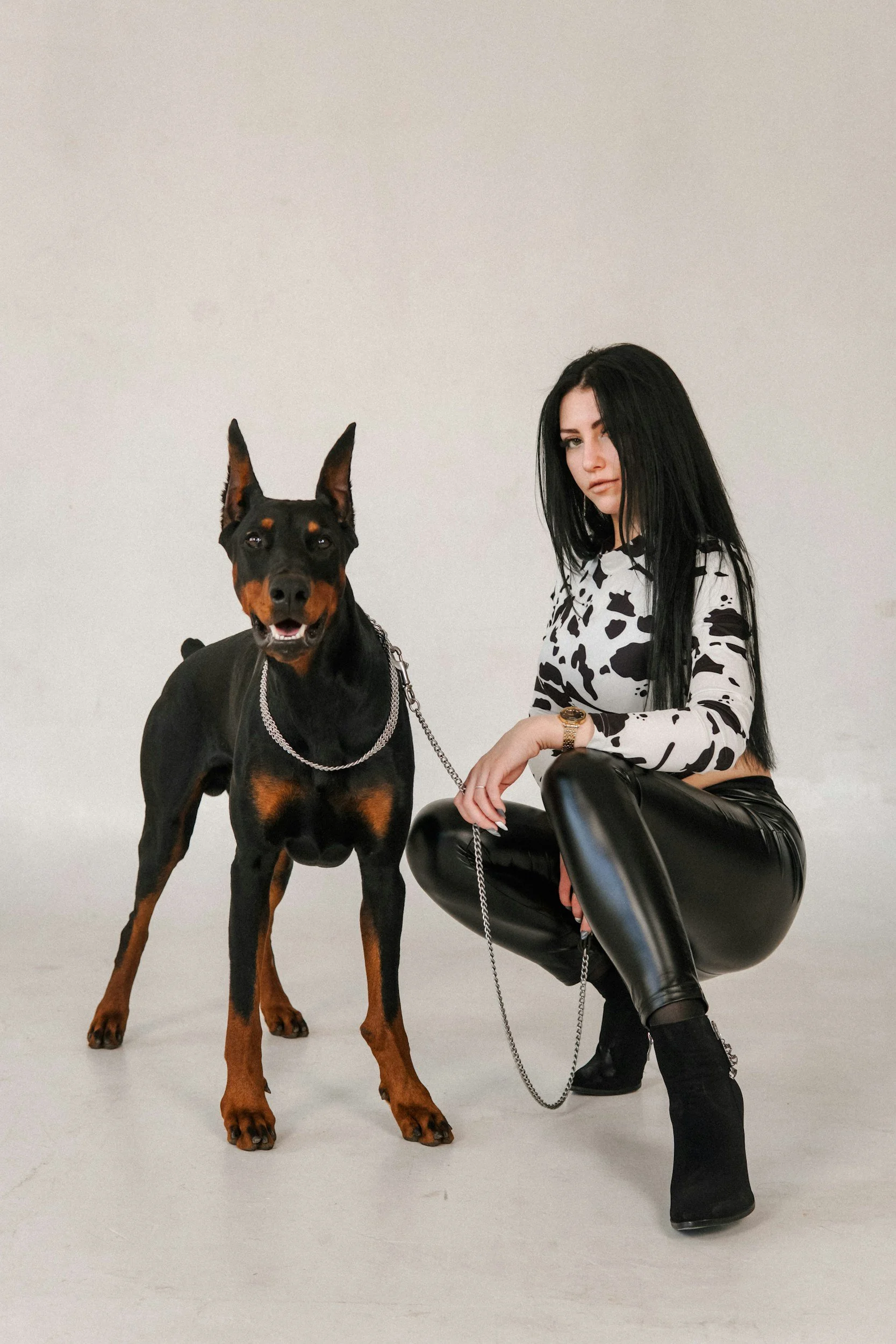
If the Black Cat Girlfriend represents composure, restraint, and quiet authority, the Doberman partner represents something closely related—but structurally different.
Not aloofness.
Not emotional distance.
Vigilance.
The Doberman partner is the one who watches the perimeter of the dyad while the relationship lives inside it.
They don’t speak often. They don’t posture. But when they intervene, the emotional temperature of the room changes immediately.
This isn’t aggression.
It’s containment with consequences.
Where the “Doberman Partner” Shows Up Online
Unlike the black cat girlfriend, the Doberman partner didn’t begin as a named archetype with a single viral origin. It emerged sideways.
On Instagram Reels and TikTok, people began posting short videos contrasting partner “energies.” First came the golden retriever boyfriend—warm, enthusiastic, openly affectionate. Then came the counter-imagery: partners described as serious, protective, quietly intense.
In captions and overlays, the word Doberman started appearing.
Not as a joke.
As a preference.
Users framed it as:
“I don’t want loud reassurance.”
“I want someone who notices.”
“I want someone who steps in.”
Many clips pair a Doberman partner with a black cat girlfriend explicitly, while others use the term to reject softness without rejecting care. The tone isn’t ironic. It’s corrective.
This is how relationship archetypes often form now—not through essays, but through repetition of a feeling people recognize before they can explain it.
What People Mean When They Say “Doberman Partner”
The term sticks because it names a real, under-acknowledged relational role.
Doberman partners are typically calm until something crosses a line. They are loyal without public performance. Protective without seeking credit. Selective about conflict, not avoidant of it.
They aren’t managing feelings first.
They’re managing risk.
They notice subtle disrespect before it becomes explicit.
They track power shifts while others are still being polite.
They intervene early so situations don’t metastasize into something harder to repair.
Most of the time, no one notices them doing this at all.
That’s the point.
How the Doberman Partner Differs from the Black Cat Girlfriend
These two archetypes are often confused because both value restraint. The difference is where that restraint is applied.
The black cat girlfriend conserves energy inwardly.
The Doberman partner deploys energy outwardly—but only when necessary.
One holds power through absence.
The other holds power through presence.
This is why social media pairs them so easily. They feel compatible because they solve different problems inside the same system.
Many people carry both capacities. Many couples divide them. One partner maintains internal equilibrium. The other guards the external boundary.
Neither is superior.
They are complementary adaptations.
Why This Role Appears in High-Functioning Couples
Doberman partners show up most often in relationships where the stakes are real.
Where reputations matter.
Where family systems are complicated.
Where careers, money, or visibility raise the cost of unmanaged conflict.
In these systems, someone becomes the relational perimeter.
Not because they are controlling.
Because containment has to live somewhere.
When everything matters, vigilance becomes a form of care.
The Hidden Cost of Being the Doberman
The meme doesn’t show what this role quietly extracts.
Doberman partners often absorb conflict so others don’t have to. They stay regulated while internally mobilized. They delay their own needs until “after things settle down.”
The problem is that things rarely settle down for someone assigned to watch.
Over time, this produces quiet resentment. Chronic alertness. Emotional fatigue that gets misread as stoicism or emotional distance.
They aren’t unfeeling.
They’re over-contained.
When Protection Turns Into Burnout
Burnout shows up when vigilance is taken for granted.
When boundary enforcement gets labeled “intensity.”
When others enjoy the safety without sharing the load.
When the Doberman partner is told to “just relax” by people benefiting from their watchfulness.
At this point, the issue isn’t love.
It’s role rigidity.
A role that began as adaptation hardens into identity.
And identities are hard to put down.
A Therapist’s Note on the Doberman Role
The Doberman role isn’t something to eliminate.
It’s something to rebalance.
Healthy versions of this archetype learn to share perimeter duties. To signal earlier instead of holding longer. To let protection be mutual rather than solitary.
The goal isn’t to soften the Doberman.
It’s to make the role sustainable.
Why This Archetype Is Resonating Now
The rise of the Doberman partner perhaps mirrors a larger American cultural shift.
Folks are tired of loud intimacy.
Tired of performative vulnerability.
Tired of emotional labor without protection.
What they are reaching for instead is quiet competence—someone who doesn’t need to emote constantly to be deeply engaged.
The Doberman partner is not about dominance.
It’s about reliability under pressure.
That’s why the term is spreading even without a formal hashtag.
People already know what it means.
Why This Is a True Companion to Black Cat Girlfriend
These two archetypes belong together because they describe the same adaptation from different angles.
Less performative emotion.
More selective engagement.
Power without noise.
They aren’t trends.
They’re responses to exhaustion.
One watches the inner world.
One guards the outer edge.
Most stable relationships rely on both—even if they’ve never had language for them before.
Be Well, Stay Kind, and Godspeed.