Saturday, July 26, 2025.
A new neuroscience study suggests your brain glows with meaning. Literally.
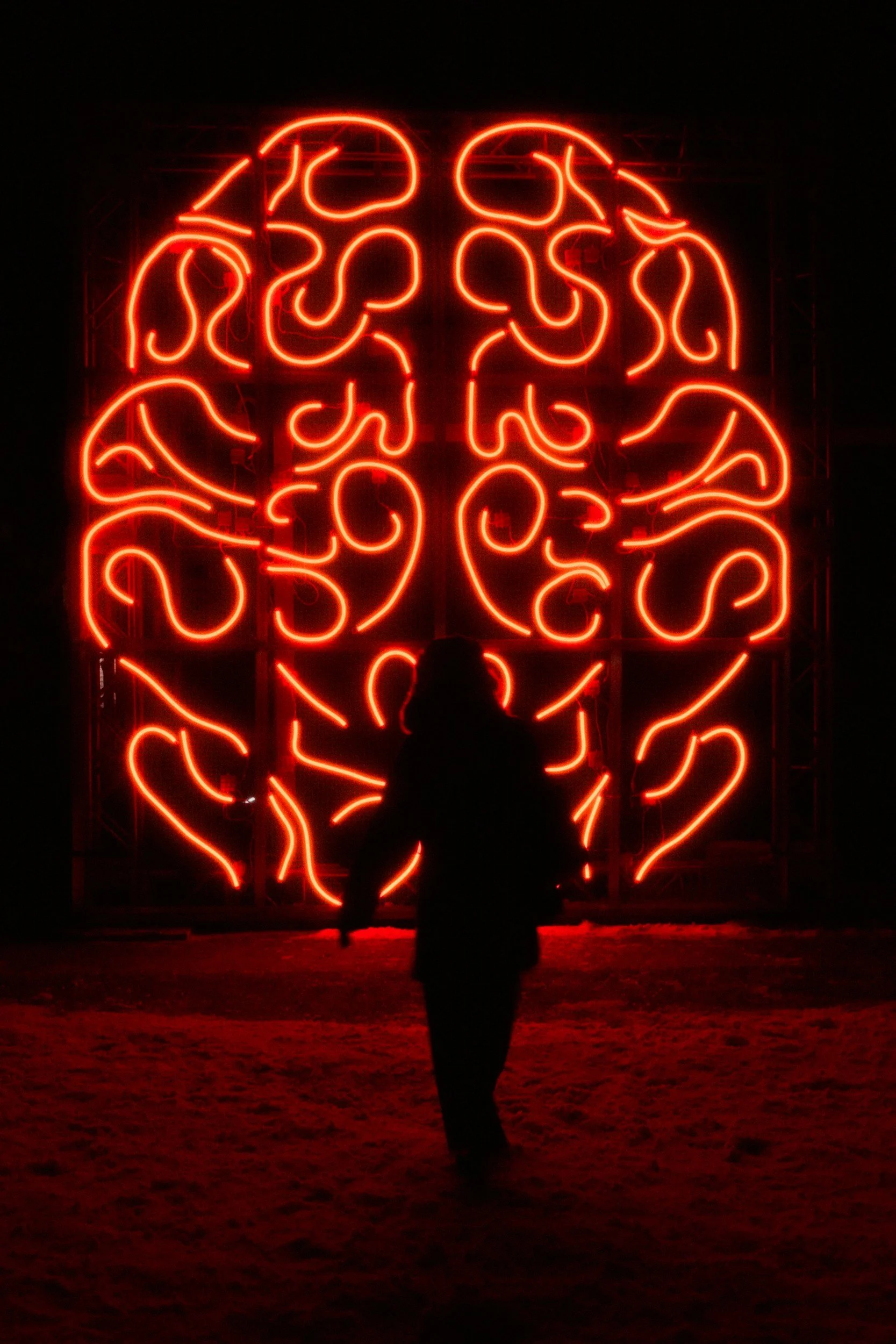
In a discovery straight out of speculative fiction, neuroscientists have confirmed that the human brain emits light—yes, actual photons—that pass through the skull and shift depending on what you’re doing or thinking.
This new study, published in iScience, reveals that the brain produces ultraweak light signals that not only exist, but may correlate with mental states like rest, alertness, and sensory processing.
It’s called ultraweak photon emission (UPE), and while it doesn’t exactly make your head glow like a lightbulb, it could launch an entirely new era of non-invasive brain imaging—a technique the researchers cheekily call photoencephalography.
What Is Ultraweak Photon Emission—and Why Is Your Brain Doing It?
All living tissue gives off faint light as a byproduct of cellular metabolism.
This light is a million times dimmer than what the human eye can perceive, and unlike fireflies or anglerfish, it’s not the result of bioluminescence. Instead, UPE occurs when molecules—excited from daily metabolic work—relax and shed tiny bursts of visible or near-infrared light.
Because the brain is an energy hog filled with photoactive compounds like flavins and serotonin, it produces more of this faint light than most other organs.
Curiously, these emissions increase during oxidative stress, aging, and even shifts in mental state—making them a potential new marker of neurological activity.
The Experiment: Watching the Brain Glow in Real Time
The team—led by Hayley Casey, Nirosha Murugan, and colleagues from Algoma University, Tufts, and Wilfrid Laurier—recruited 20 healthy adults and placed them in a pitch-black room. Sensitive photomultiplier tubes were positioned near the back and sides of each participant’s head to detect photon emissions from the occipital and temporal lobes (regions responsible for visual and auditory processing).
Participants also wore EEG caps to track brainwave activity, allowing the researchers to compare electrical and optical signals simultaneously.
The study involved five simple conditions:
Eyes open
Eyes closed
Listening to a repeating sound
Eyes closed again
Eyes open again
If brain light emissions tracked with these shifting mental states, that would suggest a powerful new avenue for passive brain monitoring.
What the Researchers Found: Your Brain’s Light Has Rhythm
The results?
The brain’s glow was real—and distinct from background light.
UPEs showed more entropy (complexity), and they pulsed at frequencies under 1 Hz—slow, rhythmic cycles of light every 1 to 10 seconds.
The occipital lobe, in particular, had a strong and unique photonic signature, especially when eyes were closed.
Even more intriguing, each task created a stable light pattern, and those patterns shifted predictably with changes in sensory input. In short, your brain glows differently depending on what you're doing—whether relaxing, listening, or simply closing your eyes.
Can Brain Light Reveal Mental States?
When the researchers compared photon signals to brainwaves, they found modest—but meaningful—correlations. For instance, alpha waves (linked to calm wakefulness) increased when eyes were closed, and this change was mirrored by a rise in photon emissions in the visual cortex.
During the auditory task, UPE variability also echoed activity in the temporal lobe. While not all expected correlations emerged—likely due to the sample size and sensor limits—the results strongly suggest that brain light may reflect moment-to-moment neural processing.
The Promise of Photoencephalography
Unlike fMRI or PET scans, which require magnets, radiation, or contrast agents, UPE-based imaging is entirely passive.
That means no interference, no chemicals, and no stress on the brain. It’s as non-invasive as sitting in a dark room and letting your thoughts quietly glow.
The researchers propose that photoencephalography could offer EEG-level temporal resolution while capturing metabolic activity in real time.
That could be a game-changer for detecting brain disorders, monitoring neurodegeneration, or even understanding the metabolic roots of emotion and cognition.
What’s Next? Sharper Sensors, Bigger Questions
Of course, this was a proof-of-concept study. The sample was small, and sensors only covered a few brain regions. Future work will need:
Narrowband filters to isolate specific wavelengths of light
Expanded sensor arrays for better spatial mapping
Comparisons with other organs to rule out general body glow
Larger, more diverse samples to explore differences by age, sex, and health
There’s also the tantalizing possibility of using machine learning to decode photon signatures. Imagine an algorithm that learns your brain’s light language—translating UPE patterns into markers of stress, fatigue, or even early dementia.
The Flicker of a New Frontier
The idea that your brain emits light—and that this glow subtly shifts with your thoughts—sounds like something more from a mystical tradition or a sci-fi novel.
But here we are, gentlle reader, grounded in hard science, measured with precision instruments, and hinting at a revolution in how we see the brain seeing.
This isn’t mind reading.
It’s metabolism made visible. And it’s only just beginning.
Be Well, Stay Kind, and Godspeed.
REFERENCE:
Casey, H., DiBerardino, I., Bonzanni, M., Rouleau, N., & Murugan, N. J. (2025). Exploring ultraweak photon emissions as optical markers of brain activity. iScience. https://doi.org/10.1016/j.isci.2025.107509