The Season of Mists and Mellow Fruitfulness
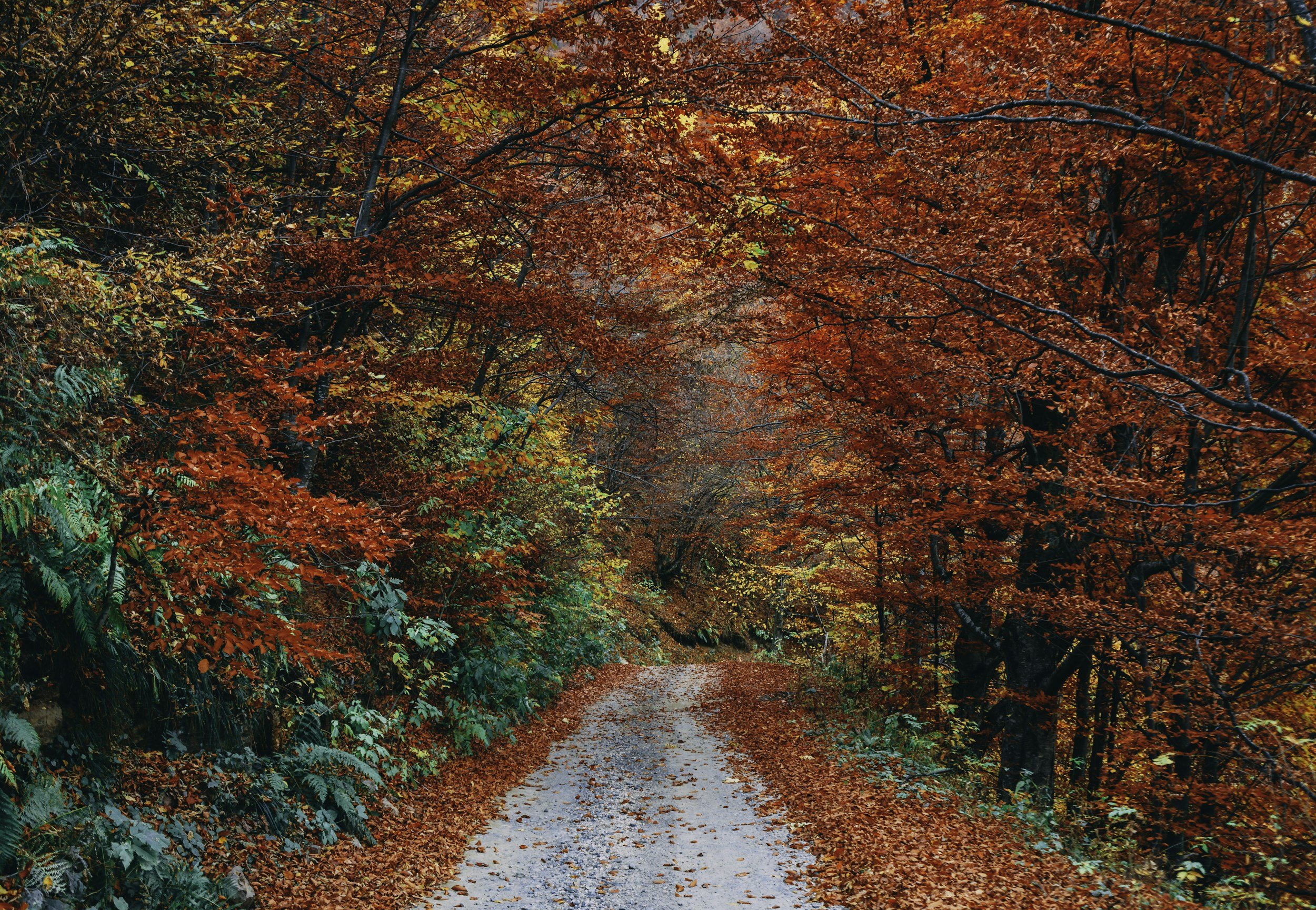
October 12, 2026.
There comes a point in the year when the light changes its mind.
It no longer arrives with the blunt confidence of June.
It comes sideways now, slipping through the trees at an angle and illuminating things it ignored all summer: the abandoned web between two fence posts, the yellowing edge of a hosta leaf, dust suspended above an old floor.
The air is cooler in the morning.
Apples appear in paper bags on kitchen counters.
Tomatoes, having behaved like an invasive species for six weeks, suddenly become precious. Someone brings the sweaters down from the attic.
Autumn does not announce itself. It accumulates.
Keats called it the “season of mists and mellow fruitfulness,” perhaps the most beautiful description of ripeness ever written. He understood that abundance and disappearance are not opposites. The orchard is heavy precisely because the year is growing old.
That is what gives autumn its peculiar emotional authority.
It is beautiful because it cannot stay.
The Season That Knows What Comes Next
Spring is full of promises, some of them plainly irresponsible. Summer encourages the fantasy that life may continue indefinitely—long evenings, open windows, tomatoes without end.
Autumn knows better.
Autumn has read the contract.
It understands that everything living is moving toward relinquishment. The leaves do not fall because the trees have failed. The fields are not harvested because fertility has ended. These are not defeats. They are the completion of a cycle.
Human beings have a harder time with this.
We cling to identities long after they have ceased to fit us. We preserve arguments whose original purpose neither partner can remember. We continue performing versions of marriage built for younger people with younger children, different bodies, different fears, and considerably less information.
Then one October morning, something becomes visible.
The children are gone. The career that once organized the household is nearing its end. A parent is failing. A diagnosis has entered the room.
The marriage remains—but the season has changed.
Ripeness Is Not Youth
Our culture has an almost embarrassing preference for beginnings.
We like first kisses, first homes, first babies, first successes.
We photograph the planting and the blossoms.
Ripeness receives less attention because it is harder to market. It contains sweetness, but also gravity: the knowledge that something has reached its fullness and cannot remain there forever.
A mature marriage is not a young marriage with more wrinkles.
It is a different thing.
It has survived enough reality to lose some of its ornamental beliefs. Each partner has discovered that the other is neither rescuer nor villain, but a flawed creature with an interior life that cannot be completely known. The old accusations may still appear, but they no longer explain quite as much as they once did.
If the couple has done its work, tenderness begins replacing certainty.
I once watched an older couple cross a hospital parking lot on a cold afternoon.
He walked several steps ahead, then noticed she had fallen behind.
He stopped. He did not call to her or make a production of helping.
He simply waited until she reached him, took the canvas bag from her hand, and matched his pace to hers.
Perhaps they had been married fifty years. Perhaps they had argued that morning. There was no way to know.
But he knew how fast she could walk.
This is one of the quieter achievements of love: the movement from possession to attention.
I do not mean resignation. I do not mean tolerating cruelty or giving up on change. I mean the gradual recognition that the life partner across the table is mortal—and so are you.
That knowledge can soften a marriage.
It can also terrify one.
The Mist Between Two Life Partners
Autumn is not merely a season of harvest. It is a season of obscured vision.
Mist settles over the field. Familiar landmarks become indistinct. The road remains, but not all of it can be seen.
Couples often arrive in therapy during such weather.
They know where they have been. They cannot see where they are going. One partner wants to recover the marriage they had. The other suspects that marriage no longer exists. Both may be correct.
The work is not always to restore what was.
Sometimes it is to discover what can now be grown from the same soil.
This requires grieving certain fantasies: that the marriage should have been easier, that the betrayal can be made not to have happened, that youth can be recovered, that the children will return and make the house noisy again, that one perfect conversation will settle everything.
Some things cannot be reversed. But they can be incorporated.
A good marriage does not remain innocent. It becomes informed.
The injuries are not forgotten, but neither are they permitted to become the only history that matters.
The couple learns to hold what happened without living permanently inside it.
That is a form of ripeness too.
What Have We Harvested?
By the autumn of life, the question changes.
It is no longer simply: What can we build?
It becomes: What have we made of what was given to us?
There may be children, or there may not. There may be property, professional standing, photographs from places one can now barely remember. But the deeper harvest is harder to inventory.
Did we become kinder? Did we learn how to repair after causing pain? Did we make our home a place where truth could be spoken? Did we become more human in each other’s presence—or merely more defended?
Autumn asks these severe questions without raising its voice.
Not every harvest is plentiful.
Some years are marked by drought, betrayal, illness, or the ordinary disasters that arrive without consulting our plans.
There are marriages in which much was planted and little grew.
But even then, the field may not be empty.
Perhaps the harvest is clarity. Perhaps it is the end of an inherited pattern.
Perhaps it is the courage to stop calling loneliness love. Perhaps it is the first honest conversation two people have had in thirty years.
We should not underestimate late harvests.
Love After the Leaves Begin to Turn
Older love has fewer illusions available to it, which may be why it can become so beautiful.
The body changes. Desire changes. Time becomes less theoretical. One begins attending more funerals than weddings. The names in the address book acquire a solemnity they did not possess before.
Against this backdrop, small acts become luminous.
A cup of coffee placed beside the bed. A hand on the shoulder in a hospital corridor. The private joke that has survived three houses, two careers, several dogs, and the raising of children. The familiar figure crossing a parking lot, now walking more slowly than before.
Young love says, We have all the time in the world.
Mature love knows this is untrue and sets the table anyway.
There is something heroic in that—not the grand heroism of rescue, but the domestic heroism of continued bestowed attention.
To look again at the person one has seen every day. To resist reducing them to the role they have played in one’s grievances. To remain curious after familiarity has provided every excuse not to be.
Love cannot prevent winter.
But it can gather wood.
Before the Frost
Every marriage contains unfinished business.
There are apologies delayed because pride found them inconvenient. Affections felt but not expressed. Questions avoided because the answers might rearrange the furniture. Gratitude assumed to be understood.
We behave as though there will always be another season in which to say the necessary thing.
Sometimes there is.
Sometimes there is not.
Autumn does not demand panic. It asks for attention.
Notice what remains. Gather what is ready. Prune what has died. Say what should not be left unsaid.
There is still warmth in the afternoon. There are still apples on the branches. There is still time to sit beside someone you have loved imperfectly and ask a better question.
The mist will come. The leaves will fall. The world will grow quiet.
But for now, the orchard is heavy.
And the light, precisely because it is leaving, is magnificent.
Why Work with Daniel?
Long marriages do not remain alive by accident. They must change as the people inside them change.
I help couples face the realities that accumulate over time: betrayal, emotional distance, changing desire, grief, illness, retirement, adult children, and the unsettling recognition that time is no longer unlimited.
The goal is not to recreate the marriage you had when you were younger. It is to discover whether the two life partners you have become can meet each other more honestly now.
There may be more life in the marriage than either of you can presently see.
Schedule a free introductory call.
Be Well, Stay Kind, and Godspeed.